Hello everyone,
I'm Tea Lover Andy.
Pesticide residues have long been a major issue in the tea industry.
When used appropriately, pesticides can stabilize tea quality and yield.
However, improper use can cause residue levels to exceed legal standards,
which is not only a violation of the law, but may also pose health risks.
So is there a way to reduce pesticide use
while still maintaining stable tea quality and yield?
Traditionally, farmers have relied on sticky traps, biological pesticides, and homemade formulations
(such as mineral oil-based suffocation sprays, with folk versions made from cooking oil and dish soap that work on a similar principle).
While these pest control materials are not chemical pesticides,
they are labor-intensive (replacing sticky traps) and less effective than conventional pesticides.
Making non-chemical pest control genuinely practical is therefore quite difficult.
Especially for large-scale tea farms, it can feel like an impossible task.
I remember attending a forum a few years ago where I learned that
precision pesticide application had already begun to be implemented in Southeast Asian countries.
Today, I'd like to share some possible approaches to precision protection against tea plant diseases and pests.
What Is Precision Protection Against Tea Plant Diseases and Pests?
Conventionally, pesticides are applied across large areas
regardless of whether individual tea plants are actually diseased or infested.
Just spray everything, that's the traditional approach.
But what if we could identify exactly which plants are affected,
and apply treatment only to those specific plants?
This would not only reduce overall pesticide use,
but also lower health risks to tea farmers.
Which Is More Serious? Disease or Pest Infestation?
Disease is generally more serious, as it involves microbial or viral transmission.
If left unchecked, it can easily spiral out of control and infect large areas of a tea garden.
By the time disease is visible to the naked eye, it is usually already quite severe.
As for pests, aside from those living in the soil, an experienced tea farmer can typically identify an infestation at a glance.
How Can We Tell When a Tea Plant Is About to Get Sick?
Based on my own research,
NDVI combined with accumulated environmental data (light, growing degree days, humidity) shows great promise.
NDVI in particular may be the most powerful tool available.
I believe that when a plant is on the verge of getting sick, it sends out distress signals.
Signals that are simply invisible to the naked eye.
Disease outbreaks are often linked to the accumulation of specific environmental conditions.
Such as sustained high humidity (relative humidity >85%), accumulated heat units reaching certain thresholds, or insufficient light.
When these conditions overlap with NDVI anomalies, early warning accuracy can be significantly improved.
As the saying goes: if you feel a cold coming on, take medicine early.
Prevention is better than cure.
What Is NDVI?
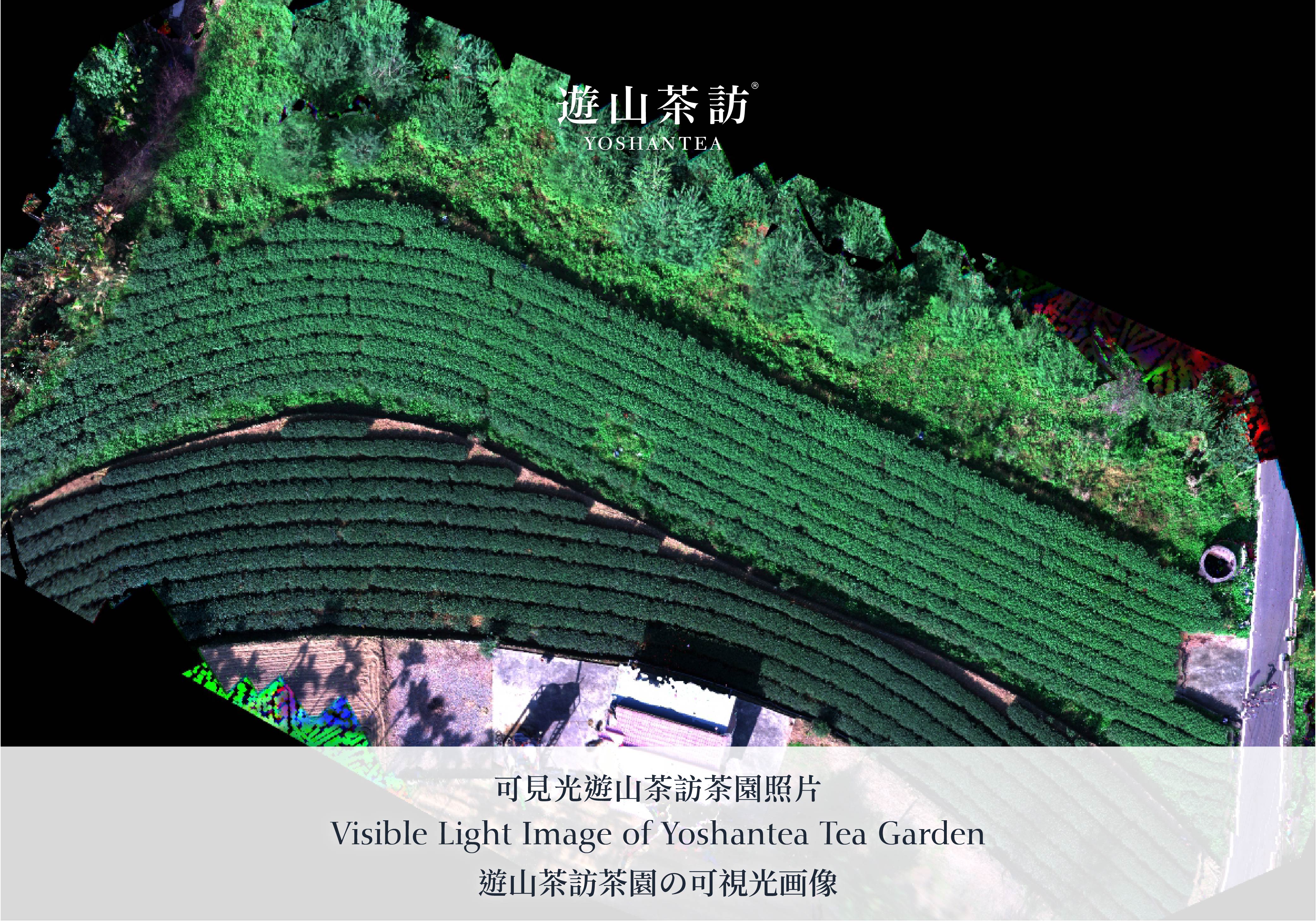
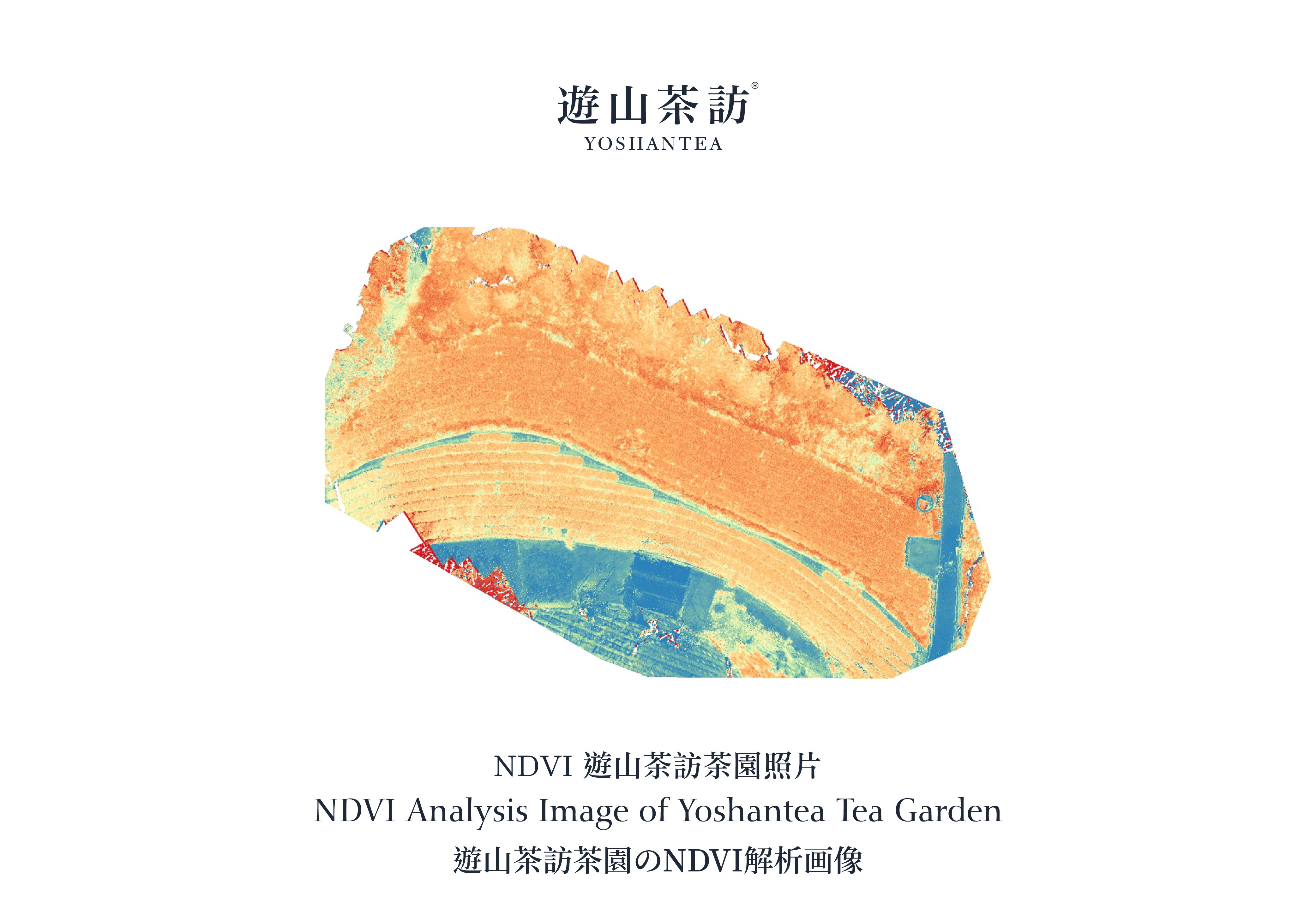
NDVI (Normalized Difference Vegetation Index) is an indicator used to assess plant health by measuring the difference in reflectance between near-infrared light (NIR) and red light (Red).
The formula is as follows:
NDVI = (NIR - Red) / (NIR + Red)
Values range from -1 to 1. Healthy tea plants typically show NDVI values above 0.6.
When a tea plant begins to show early signs of disease, photosynthetic efficiency declines, near-infrared reflectance drops,
and NDVI values begin to show anomalies - often 1 to 2 weeks before symptoms become visible to the naked eye.
This is precisely NDVI's most important value: it gives us the opportunity to detect abnormalities and take action before a tea plant shows obvious signs of illness.
How Might NDVI Be Used in the Future - Can AI Help?
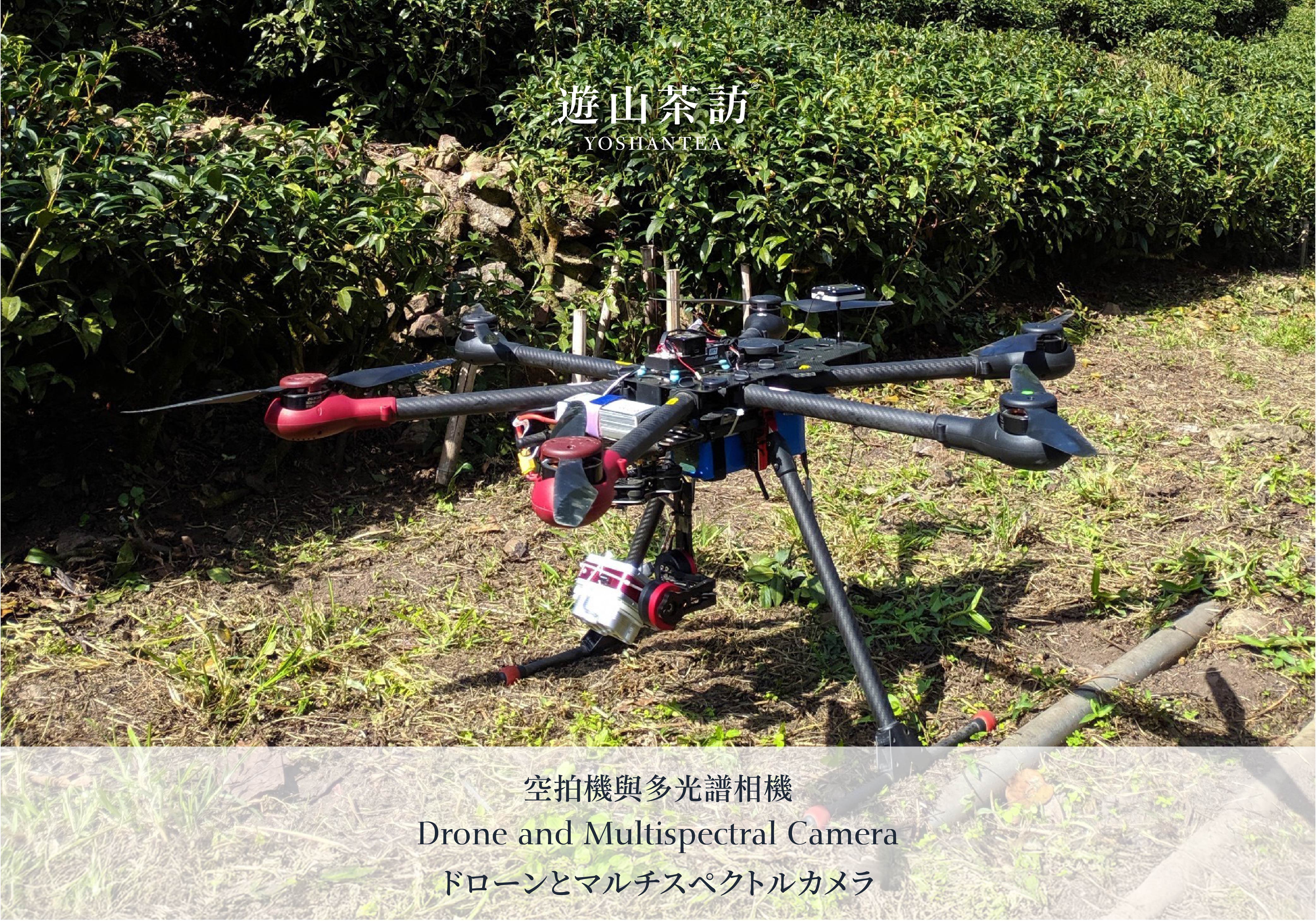
A multispectral camera costs around NT$1,000,000.
It simply isn't realistic to purchase one just for managing a tea garden.
This is where AI could play a crucial role.
By collecting NDVI data and images,
and simultaneously capturing the same scenes with consumer-grade cameras,
it should be possible to identify a meaningful relationship between the two sets of images.
This is exactly where AI comes in.
The key question is whether NDVI can be used to identify early signs of disease.
If it can, we can begin building an NDVI-to-RGB predictive model.
Once that model is established, precision agriculture becomes a reality.
Farmers would no longer need expensive multispectral equipment.
With just a consumer-grade drone,
AI could derive health indicators approximating NDVI from ordinary photographs.
Conclusion
Imagine waking up one morning,
a tea farmer simply launches a drone equipped with a consumer-grade camera,
which follows a pre-programmed route to survey the entire tea garden.
After obtaining geographic data on plant disease and pest distribution,
a tracked autonomous spraying robot is deployed
to apply treatment precisely to the affected areas.
Pesticide use is dramatically reduced, farmer health is protected, and tea quality becomes more consistent.
This is not science fiction. Similar systems are already being trialed in parts of Southeast Asia and in countries at the forefront of precision agriculture.
Taiwan's tea industry has deep roots and a rich heritage. If it embraces modern technology, it has every opportunity to lead the world.
This may well be the future of tea farming.
The above reflects my personal research and vision.
If you have any additions or insights, please leave a comment.
I will incorporate them into the article.
I hope this has been helpful.
See you next time.
# YoshantTea #TaiwanTea #DongdingOolong #OolongTea #TeaTourismFactory #FSSC22000 #SafeTea #TeaPestControl #PrecisionAgriculture #NDVI #MultispectralImaging #SmartFarming #TeaGardenManagement #PesticideReduction #PlantHealthMonitoring #DroneAgriculture #AIFarming