Hello everyone.
I'm Andy, a tea enthusiast.
Why does oolong tea need boiling water?
Isn't a lower temperature fine?
This time I'm using ball-rolled oolong tea as an example to explain why oolong tea should always be brewed with boiling water.
The short answer is that ball-rolled oolong tea should always be brewed with boiling water.
During processing, ball-rolled oolong goes through a rolling stage that shapes the leaves into tight balls.
Only a high enough water temperature can fully unfurl the leaves within a short brewing time and release the complete range of aroma and flavor compounds inside them.
Brewing at a lower temperature produces a lighter tasting liquor,
but that lightness actually means the tea hasn't been fully extracted.
Both the aroma complexity and the body of the flavor end up incomplete.
How does water temperature affect the tea leaves?
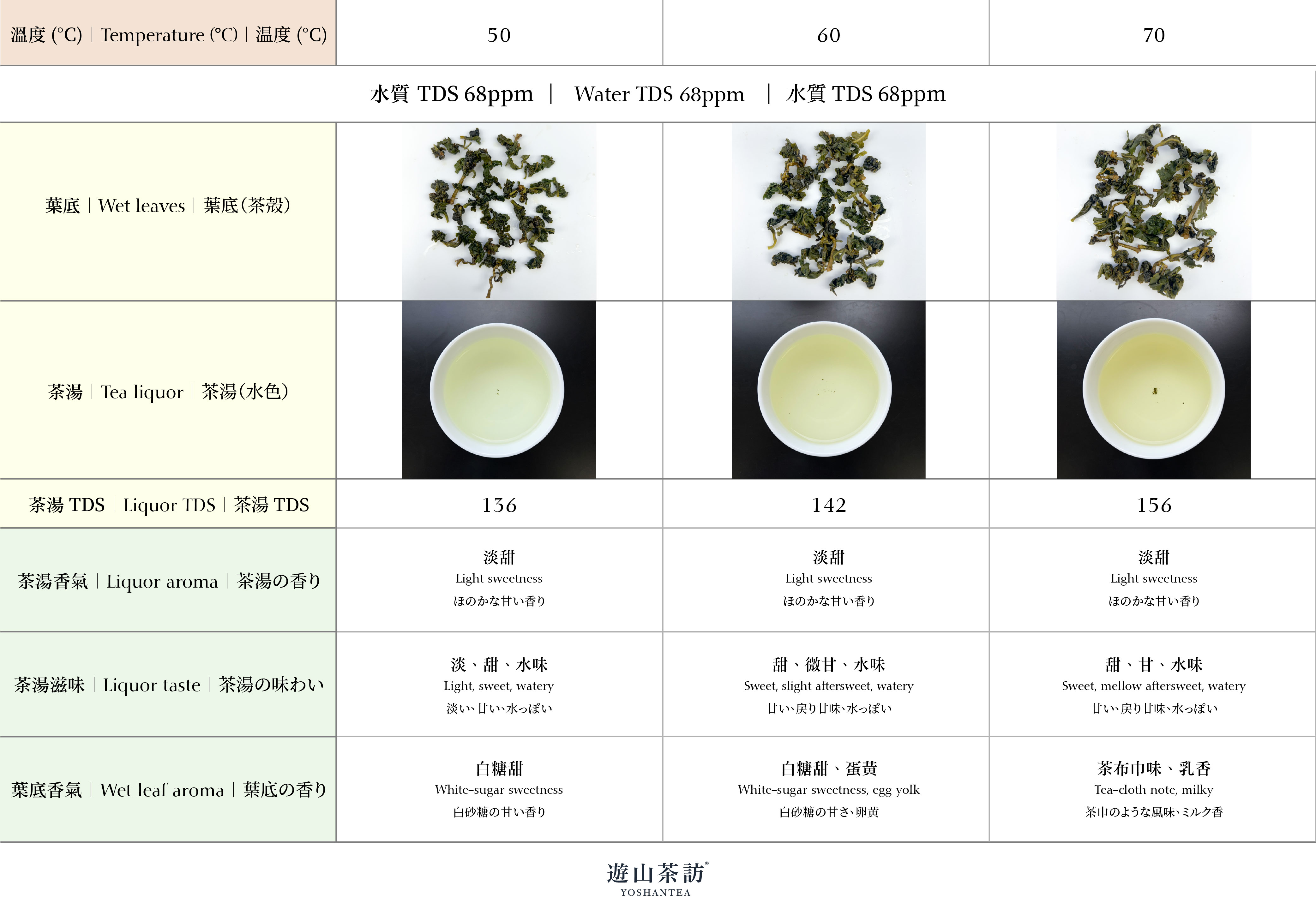
For this test, the same ball-rolled oolong tea was brewed at six different temperatures,
50, 60, 70, 80, 90 and 100 degrees Celsius, using water with a fixed TDS of 68ppm.
The data shows a clear trend. As temperature rises, the TDS of the brewed liquor rises too.
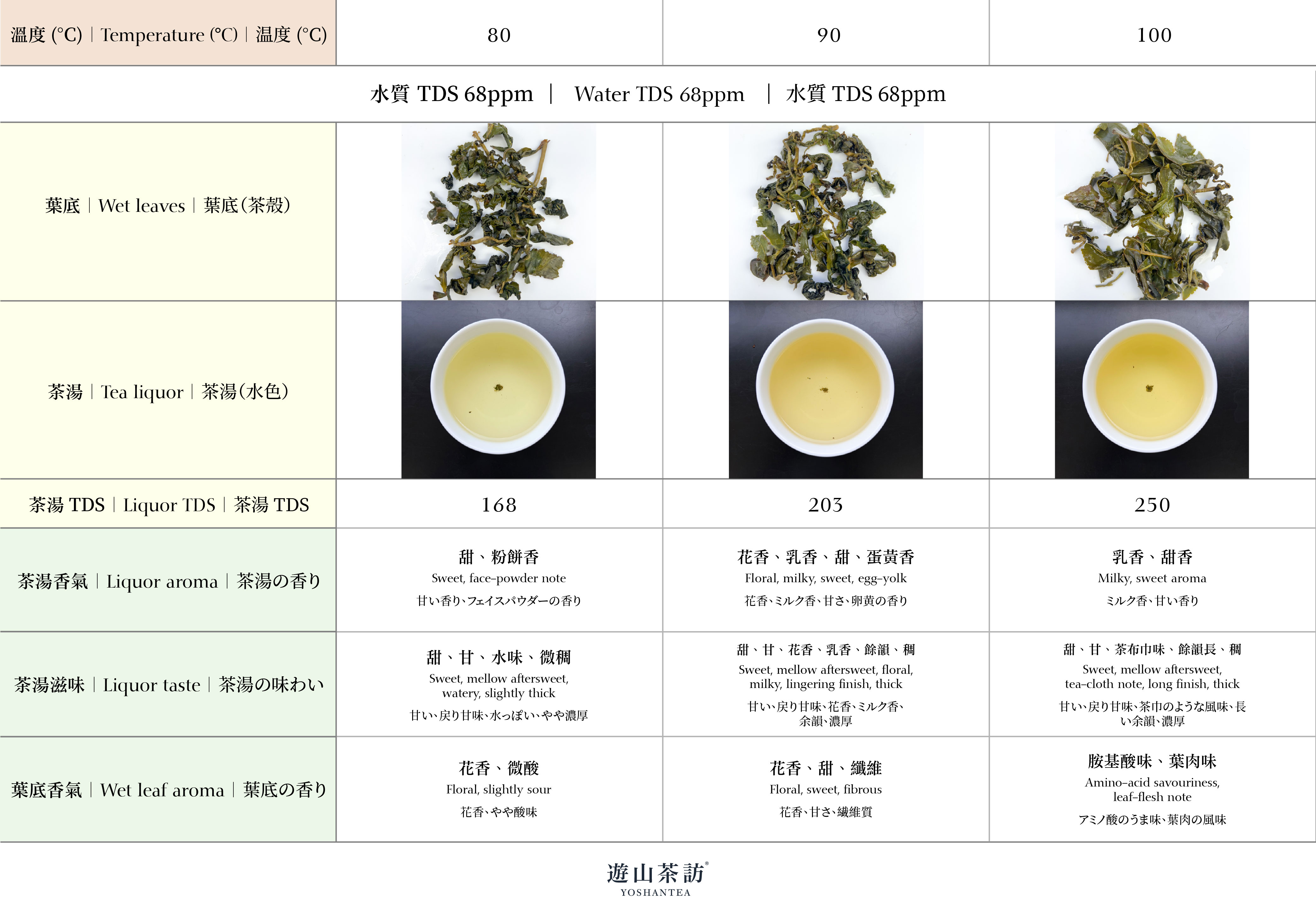
At 50 degrees the liquor TDS was 136, and at a full boil of 100 degrees it reached 250, almost double the low temperature reading.
The aroma follows the same pattern.
Between 50 and 70 degrees the liquor stayed mildly sweet with a fairly simple profile.
At 80 degrees a sweet, pressed-powder note appeared.
At 90 degrees the cup developed floral, creamy, sweet and custard-like notes, a noticeably richer profile.
At a full boil, the cup turned creamy and sweet,
and the flavor moved from a simple sweetness toward floral,creamy notes with a longer finish and a thicker body.
What happens when oolong is brewed at a low temperature?
The spent leaves tell the same story.
Leaves brewed between 50 and 70 degrees barely unfurled at all and stayed tightly rolled.
As the temperature rose the leaves opened up more, and at a full boil they unfurled completely, showing their full leaf shape.
This means that at low temperatures, the leaf tissue never fully opens,
so the aromatic and flavor compounds inside the leaf never get the chance to release before the brew is finished.
Spent leaves from a low temperature brew mostly smell of a simple sugary sweetness, and the liquor tastes thin and watery with little depth.
In contrast,spent leaves from a high temperature brew show floral notes,
a fibrous aroma and even amino acid notes,
a sign that the compounds inside the leaf have been fully released.
So a low temperature brew of ball-rolled oolong isn't a sign of a poor quality tea.
It simply means the water wasn't hot enough for the leaf to show what it's really capable of.
What does a regression analysis of this data show?
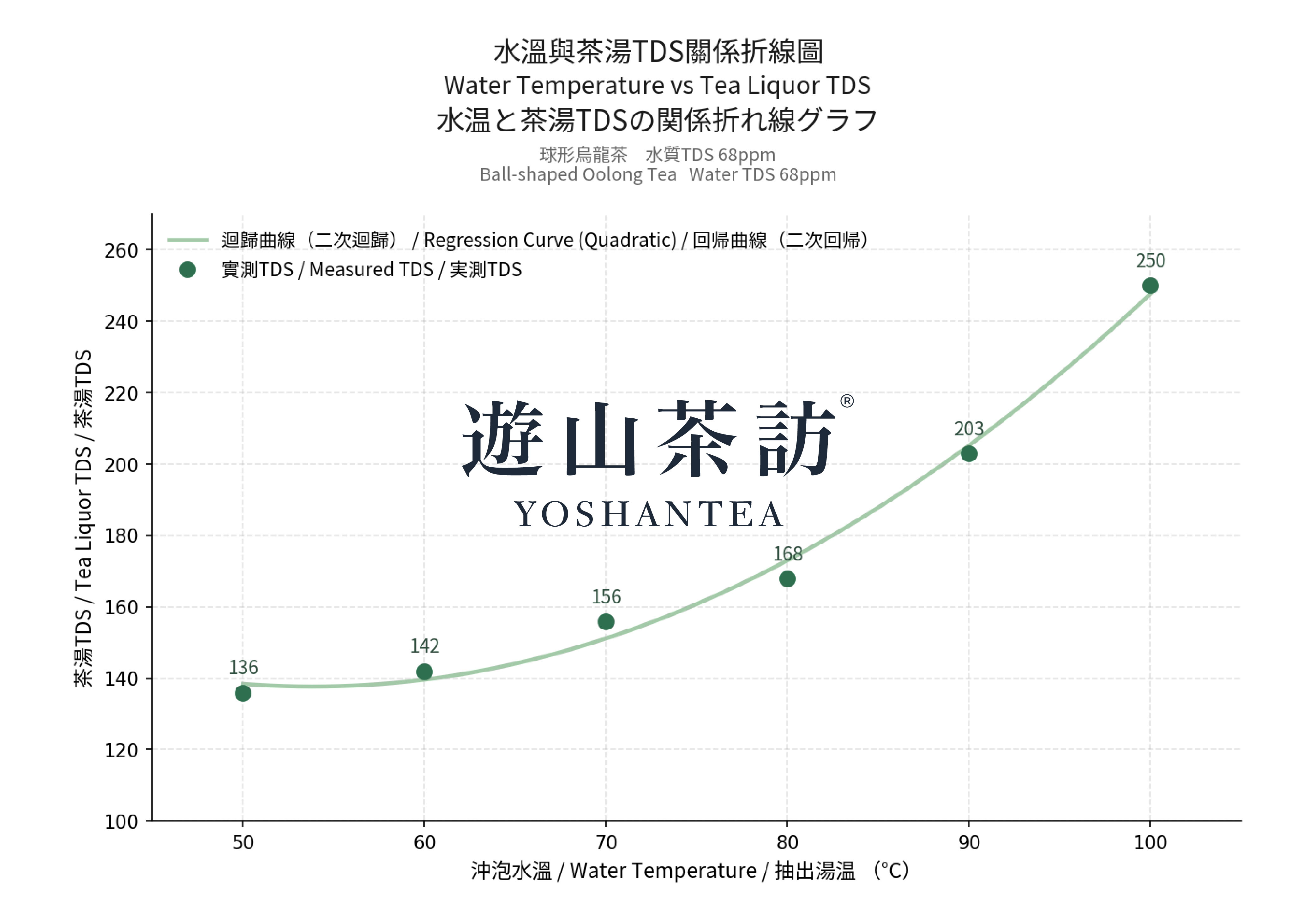
Running a regression on the six TDS readings shows that a quadratic fit works best,
TDS = 0.0516×T² − 5.555×T + 287.14, with an R² of 0.993,
meaning the curve closely describes the relationship between water temperature and liquor concentration.
The curve also shows that the TDS rise is fairly gentle between 60 and 70 degrees but speeds up noticeably past 80 degrees,
suggesting that once water temperature crosses a certain threshold,
the rate at which compounds release from the leaf speeds up as well.
In summary
Ball-rolled oolong tea should be brewed with boiling water.
Because the leaves are tightly rolled during processing,
only a high enough water temperature can fully unfurl them and release the complete aroma and flavor compounds,
bringing out floral, creamy and sweet notes in full layers.
A lower temperature brew may taste lighter and smoother,
but it means the tea hasn't been fully extracted and can't show what ball-rolled oolong is really about.
Next time you brew a ball-rolled oolong, remember to use water at a full boil, so you can taste everything the leaf has to offer.
Hope this has been helpful.
See you next time.
#yoshantea #taiwantea #dongdingtea #oolongtea #teafactory #FSSC22000 #safetea #teaknowledge #ballrolledoolong #teaextraction #brewingscience