Hello everyone!
I'm Andy, a tea enthusiast.
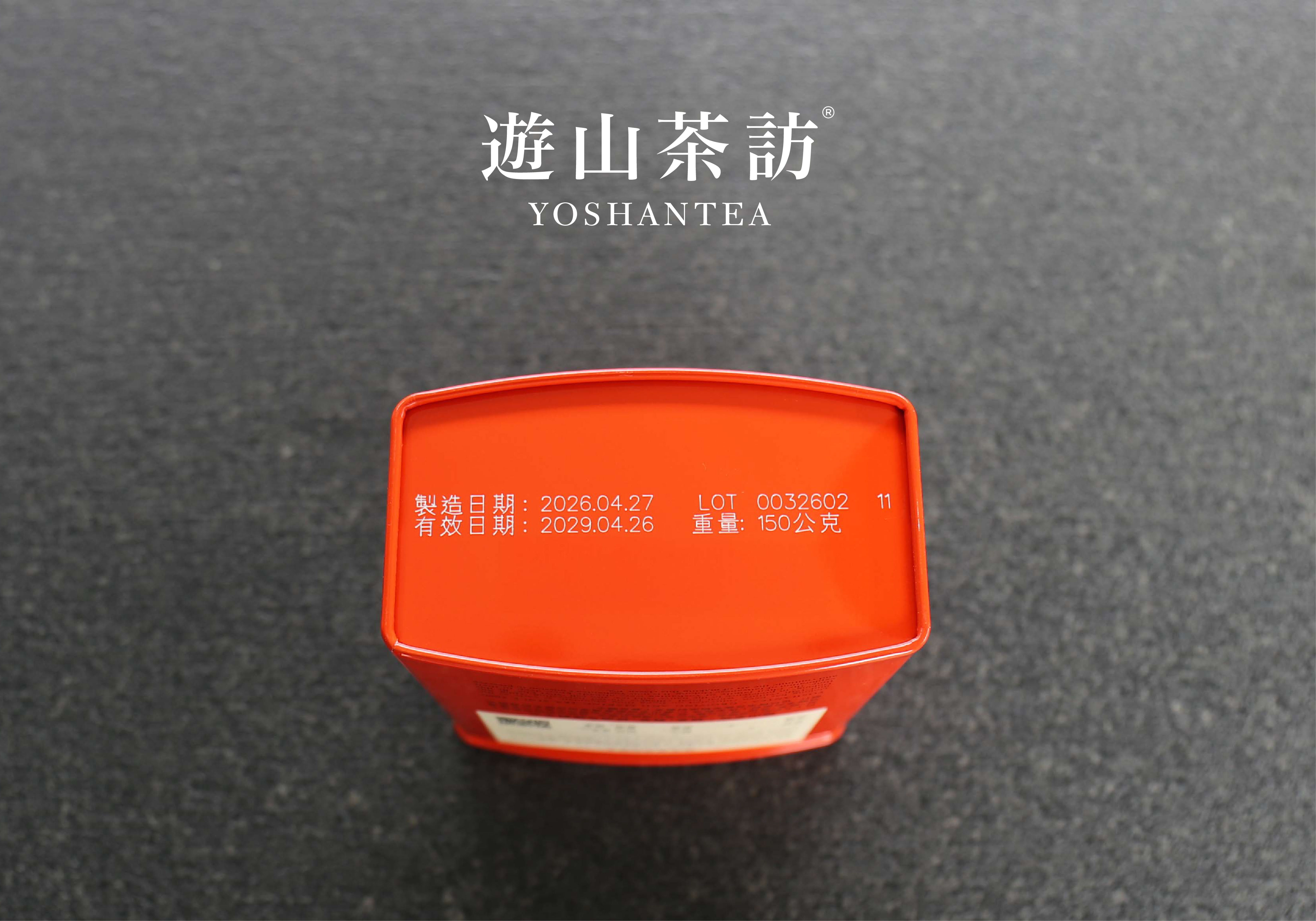
How is the expiration date for tea determined?
It's a question many people are curious about.
In this article, I'll share how tea shelf life is established.
Why does tea need an expiration date?
It's a legal requirement.
Food products must display an "expiration date,"
which guarantees food safety and quality
as long as the product remains unopened and within that period.
The "expiration date" must be displayed on the label.
Listing only a "best before" or "enjoy by" date
does not satisfy legal requirements.
Under Article 22 of the Act Governing Food Safety and Sanitation,
all commercially packaged food products must clearly indicate an expiration date,
defined as the final date by which the product retains its value
under specified storage conditions.
Producers are responsible for ensuring no spoilage or deterioration occurs before that date.
Consuming expired food is not recommended.
This is the regulatory framework.
The law does not, however, specify a required shelf life for tea.
As a side note, under Article 32, Paragraph 1, Subparagraph 8
of the Tobacco and Alcohol Administration Act
(Ministry of Finance, National Treasury Administration),
beverages with an alcohol content of 7% or above
are exempt from displaying an expiration date.
Does tea expire?
This question can be explored from two angles.
Tea quality encompasses both food safety and flavor degradation.
One affects your health; the other affects your enjoyment.
The health risk from tea stored for too long is extremely low.
The more common concern is flavor degradation:
when tea loses its appeal over time.
What factors affect tea shelf life?
Food products are affected by temperature, humidity, light, and packaging.
Shelf life refers to the period during which a product remains safe to consume
without posing food safety risks.
Tea is a food product, and its defining characteristic is an extremely low moisture content,
typically around 5%~6%.
At this level, water activity (Aw) falls between approximately 0.14 and 0.30.
Most bacteria, yeasts, and molds struggle to grow at Aw below 0.6.
Tea also contains catechin compounds with natural antibacterial properties.
Combined with its low water activity,
tea is a relatively stable and long-lasting product.
https://www.afa.gov.tw/cht/index.php?code=list&flag=detail&ids=706&article_id=31456
Water activity is one of the primary factors controlling microbial growth
(moisture content above 12% promotes microbial proliferation).
As time passes and moisture content rises,
mold growth becomes the main food safety risk for expired tea.
Based on our own testing, properly stored tea,
kept away from particularly humid or stuffy environments and away from water sources,
is unlikely to develop mold.
How is tea shelf life determined?
There are several approaches:
1. Conduct your own shelf-life retention study.
Package the tea and evaluate it at different time intervals,
including microbial testing, moisture content testing, and sensory evaluation.
Document storage conditions throughout.
The testing logic from the "Evaluation Guidelines for Expiration Dates
of Commercially Packaged Alcoholic Beverages" can serve as a useful reference.
https://www.nta.gov.tw/download/6748/
2. Engage an accredited laboratory to perform food preservation testing,
accelerated shelf-life testing, or stability testing.
3. Reference the "Reference for Evaluating Expiration Dates of Packaged Tea,"
which recommends not exceeding four years as a general guideline.
https://www.afa.gov.tw/cht/index.php?code=list&flag=detail&ids=706&article_id=31456
4. Use the isotherm moisture sorption curve method to predict shelf life.
This approach measures a substance's ability to absorb or release moisture at a given temperature.
It is commonly applied to evaluate traditional Chinese medicinal herbs,
food storage conditions, packaging material selection, and microbial growth prediction.
While not yet formally recognized by regulations, it can be used to estimate shelf life.
The formula is complex and can be evaluated using AI tools.
Prediction example for reference:
Packaging material: PET/AL/LLDPE aluminum foil bag, completely blocking moisture and oxygen (WVTR, OTR ≈ 0).
Based on GAB or measured isotherm sorption curves, combined with packaging barrier properties:
Sf = ln[(Xe - Xi) / (Xe - Xc)] / (Pc * (A/Ws) * (P0/S))
- Sf: Shelf life (days)
- Xi: Initial moisture content
- Xc: Critical moisture content
- Xe: Equilibrium moisture content (from GAB curve)
- Pc: Packaging water vapor transmission rate
- A: Packaging surface area (m²)
- Ws: Sample weight (g)
- P0: Water vapor pressure at storage temperature (mmHg)
- S: Slope of the isotherm sorption curve
3g small packet + aluminum foil bag: theoretical shelf life ≈ 2.3 years.
The "best flavor window" matters more than the expiration date
As long as tea hasn't developed mold,
the more meaningful consideration is the "best flavor window":
the period during which the tea's taste profile remains at its best.
Common signs of flavor degradation include
darkening of the leaf color, reduced aroma,
and the development of unpleasant off-flavors.
If a tea improves with age, it is considered an aged tea,
and the "best flavor window" concept does not apply,
though it still requires a labeled expiration date.
How should tea be stored?
Avoid storing tea in excessively hot, humid, or light-exposed environments.
In practical terms, the spot where you normally enjoy your tea at home is usually ideal.
Buy tea in reasonable quantities,
ideally no more than a six-month supply at a time.
For teas with higher oxidation levels or those that have been roasted,
the flavor typically improves over time as long as mold does not develop,
so this concern is less relevant.
If the aroma of a tea makes you feel physically uncomfortable,
do not drink it, regardless of whether it has technically "gone bad."
Are there other regulatory concerns within the expiration period?
Once you have set an expiration date,
it is important to monitor pesticide residue regulations.
Regulatory changes regarding allowable pesticide residues
can occur during a tea's valid shelf life.
If the Taiwan Food and Drug Administration conducts an inspection
without awareness of such changes, a violation may result.
In summary, there is no universal rule that tea must carry a two-year expiration date.
The key principles are:
clearly display the expiration date,
be able to substantiate the basis for that date,
avoid customer complaints,
and prevent food safety issues.
Keep these principles in mind,
and you can establish an appropriate expiration date for your tea.
Further Reading: Tea Storage Tips. How Long Does Tea Last After Opening? Learn Tea Storage in 1 Minute
https://www.yoshantea.com/pc/news.php?id=21061560c8010134c8c&lang=zh-tw
Revised: 2026.05.15
Published: 2022.10.07
Hope this has been helpful. See you next time!
#yoshantea #taiwantea #dongdingtea #oolongtea #teafactory #FSSC22000 #safetea #teaknowledge #teaexpiration #teashelflife #foodsafety #teastorage #teaeducation