Hello everyone,
I’m Andy, a tea enthusiast.
Many tea drinkers have probably heard this saying:
“High mountain tea leaves are thicker, so they taste better.”
Some people even pinch dry or wet leaves and feel that
“they really do seem thicker.”
Today, I’d like to explore a question with you:
Are high mountain tea leaves actually thicker?
What Factors Affect Tea Leaf Thickness?
Before discussing altitude, one important point must be clarified:
leaf thickness is never determined by a single factor.
Major factors affecting tea leaf thickness include:
- Leaf growth duration (maturity)
- Environmental temperature
- Tea cultivar
- Light conditions
- Fertilization
- Rainfall and water availability
Does Altitude Affect Leaf Thickness?
This measurement focused on this year’s spring tea, under the following conditions:
- Same cultivar: Qin Xin Oolong
- Tea garden altitude: 700 m to 2,600 m
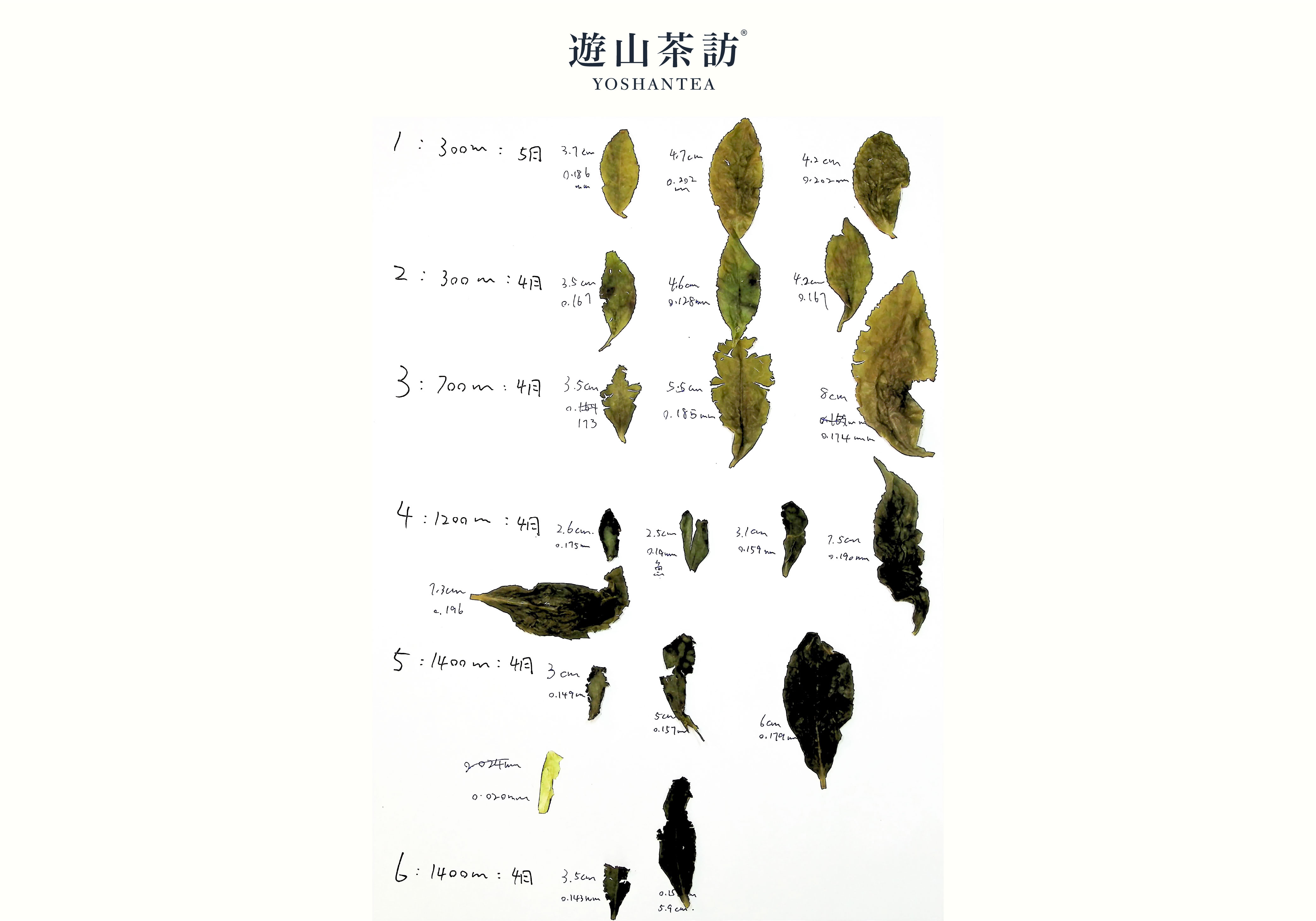
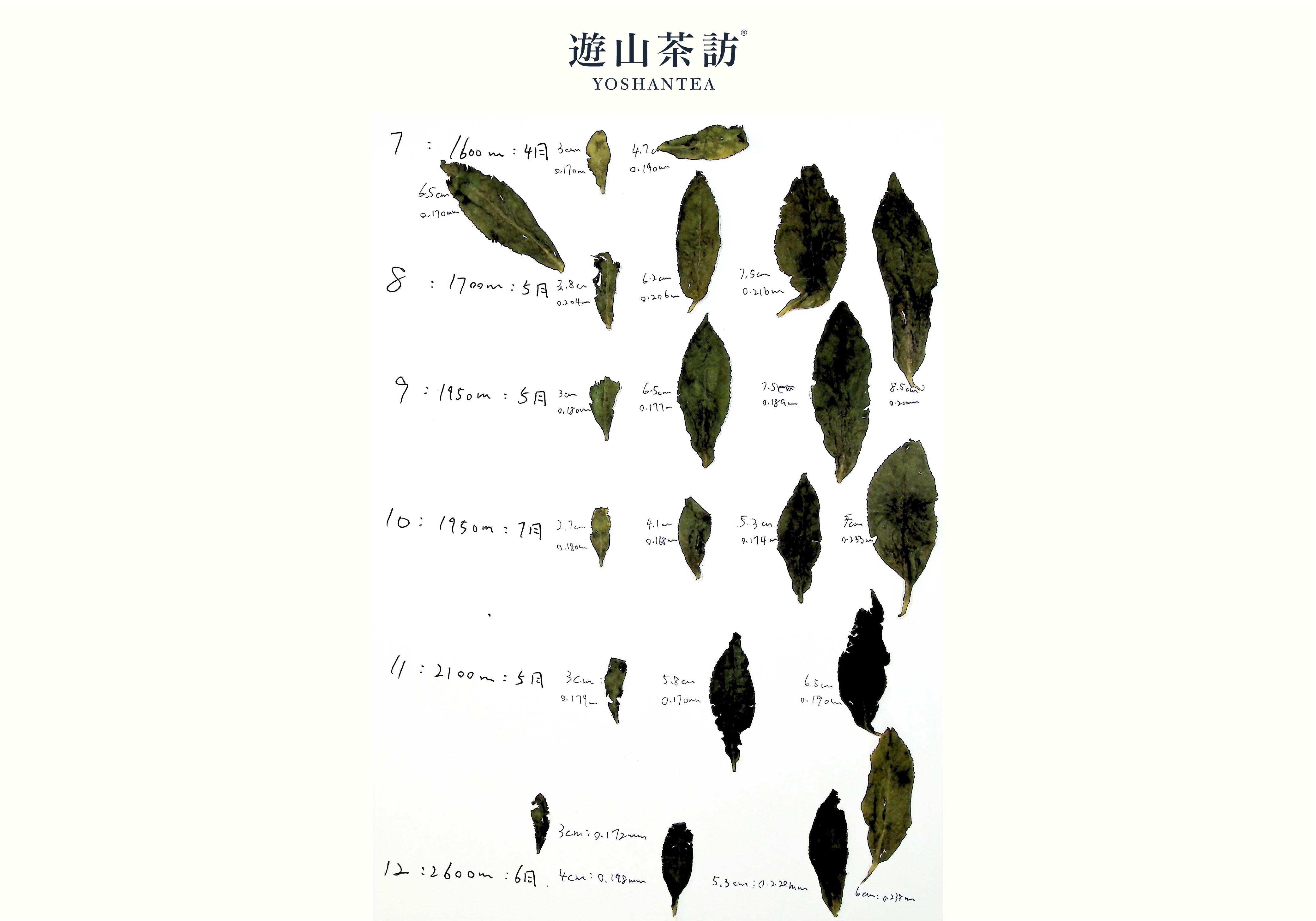
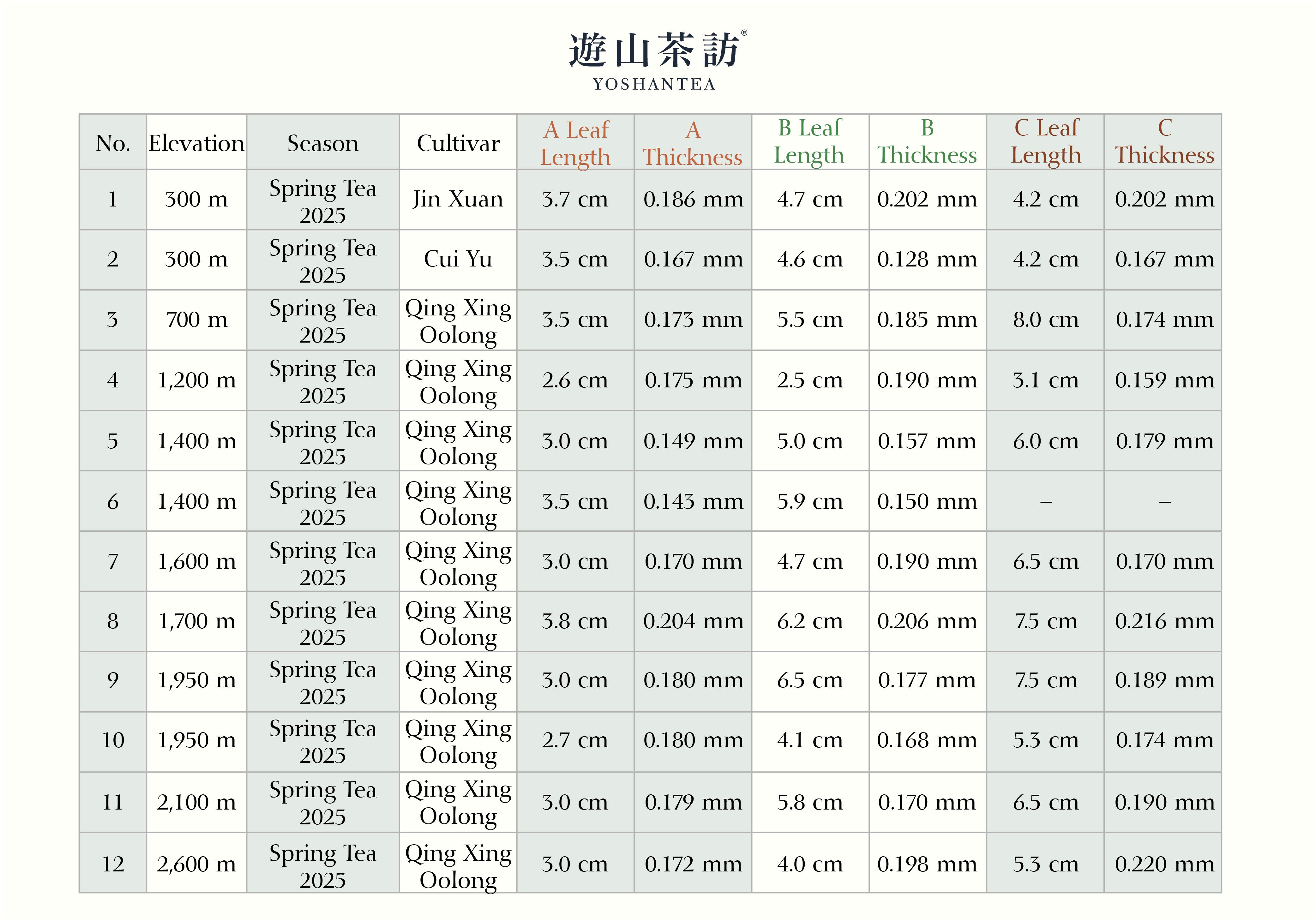
- Each leaf was measured for both length and thickness
- Leaf length used as a control variable
Due to the limited sample size, no formal statistical test
(p-value < 0.05) could be conducted.
The following conclusions are therefore trend observations.
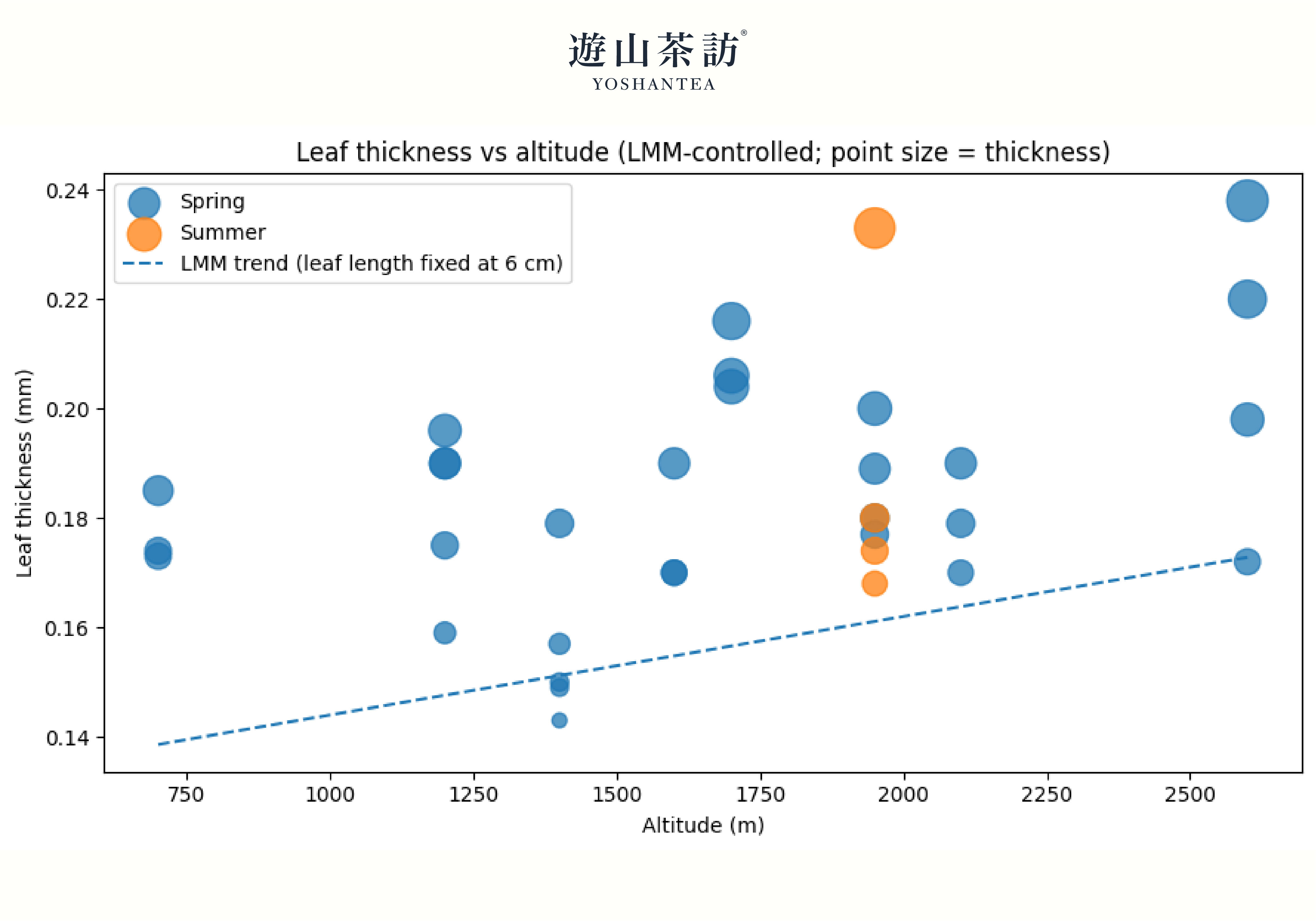
Observed results (see image for reference):
- 700–1,200 m: leaf thickness mainly around 0.17–0.19 mm
- ≥1,700 m: leaves thicker than 0.21 mm begin to appear
- 2,600 m: thickness consistently around 0.22–0.24 mm
The data suggest that the upper limit of leaf thickness increases with altitude.
However, this does not mean all high mountain tea leaves are thicker—
only that they have a greater potential to grow thicker.
Does Season Affect Leaf Thickness?
Comparing Sample No. 9 (spring tea) and No. 10 (summer tea):
- Under the same altitude and cultivar conditions
- Spring tea leaves are noticeably thicker than summer tea leaves
An interesting observation was also noted:
Even when summer tea leaves come from more mature leaf positions,
they still show a trend toward increased thickness,
yet remain thinner overall than spring tea leaves.
This indicates that seasonal growth rhythm and physiological conditions
have a significant impact on leaf structure.
Can We Really Feel Thickness Differences by Hand?
Based on actual measurements:
- Tea leaf thickness ranges roughly from 0.14 to 0.24 mm
- Differences between most samples are about 0.02–0.05 mm (20–50 µm)
Human fingertips can generally distinguish thickness differences
of about 0.1 mm.
In other words, differences of 0.02–0.05 mm
are almost impossible to judge accurately by touch alone.
So What Are We Actually Feeling?
When we pinch or touch tea leaves,
we are not truly sensing “thickness,” but rather:
Leaf elasticity × surface structure
More plainly:
- Fiber density
- Firmness of the leaf flesh
- Maturity and tissue structure of the tea leaf
This explains why leaves of similar thickness
can still feel “thick,” “soft,” or “coarse” to the touch.
Ultimately, the quality of tea should be judged by drinking it.
Only the experience in the cup
reveals the true nature of the tea.
Thanks for reading.
I hope this was helpful.
See you next time.
#highmountaintea #teascience #tealeafthickness #springtea #summertea #qinxinoolong #yoshantea #taiwantea #dongdingtea #oolongtea #teafacotry #FSSC22000 #safetea