Hello everyone.
I’m Andy, a tea enthusiast.
Pest control is one of the most critical aspects of factory management.
In many cases, the product itself is perfectly fine,
but contamination from pests indirectly causes quality issues.
Today I’d like to share how pest control should be approached in a tea factory.
Bottom line first: effective pest control is not about spending more money.
It’s about consistently recording the types and quantities of pests caught, analyzing trends,
and adjusting strategies accordingly.
What are the common pests in a factory?
The three main categories of pests found in factories are flying insects
(houseflies, fruit flies, and small gnats), rodents, and cockroaches.
Each has a different origin and requires a different approach. There is no one-size-fits-all solution.
Insect species signal different sources
The type of insect is itself a signal, and it forms the foundation of trend analysis.
Take houseflies and fruit flies as an example:
both are flying insects, but they indicate entirely different problems.
Houseflies are external pests that typically fly in from outside,
indicating that doors or windows are not properly sealed, or that entry points lack adequate insect barriers.
Fruit flies are internal pests that generally breed inside the facility due to standing water,
decaying organic matter, or uncleaned drainage channels.
By regularly logging the species of flying insects caught,
a noticeable increase in housefly numbers points toward entry point management;
a rise in fruit flies points toward internal sanitation.
This kind of trend analysis is far more targeted than simply spraying pesticides.
Different approaches for rodent control
For indoor rodent control, avoid using rodenticide whenever possible.
The reason is straightforward: a rodent that ingests poison may die inside wall cavities, ceiling gaps, or other hard-to-reach corners.
By the time the carcass is discovered, decomposition has often already begun, creating a far more serious hygiene problem.
Indoors, snap traps or glue boards are recommended, as they physically capture the rodent,
confirm whether a catch has been made, and allow for immediate removal.
Some staff may have concerns about the discomfort caused by snap traps;
in such cases, glue boards are a common alternative.
Bait stations may be considered for outdoor or perimeter areas of storage buildings when necessary,
and should be operated and managed by licensed professionals.
Managing flying insects through lighting
Lighting choices directly affect the effectiveness of flying insect control. There are two distinct approaches.
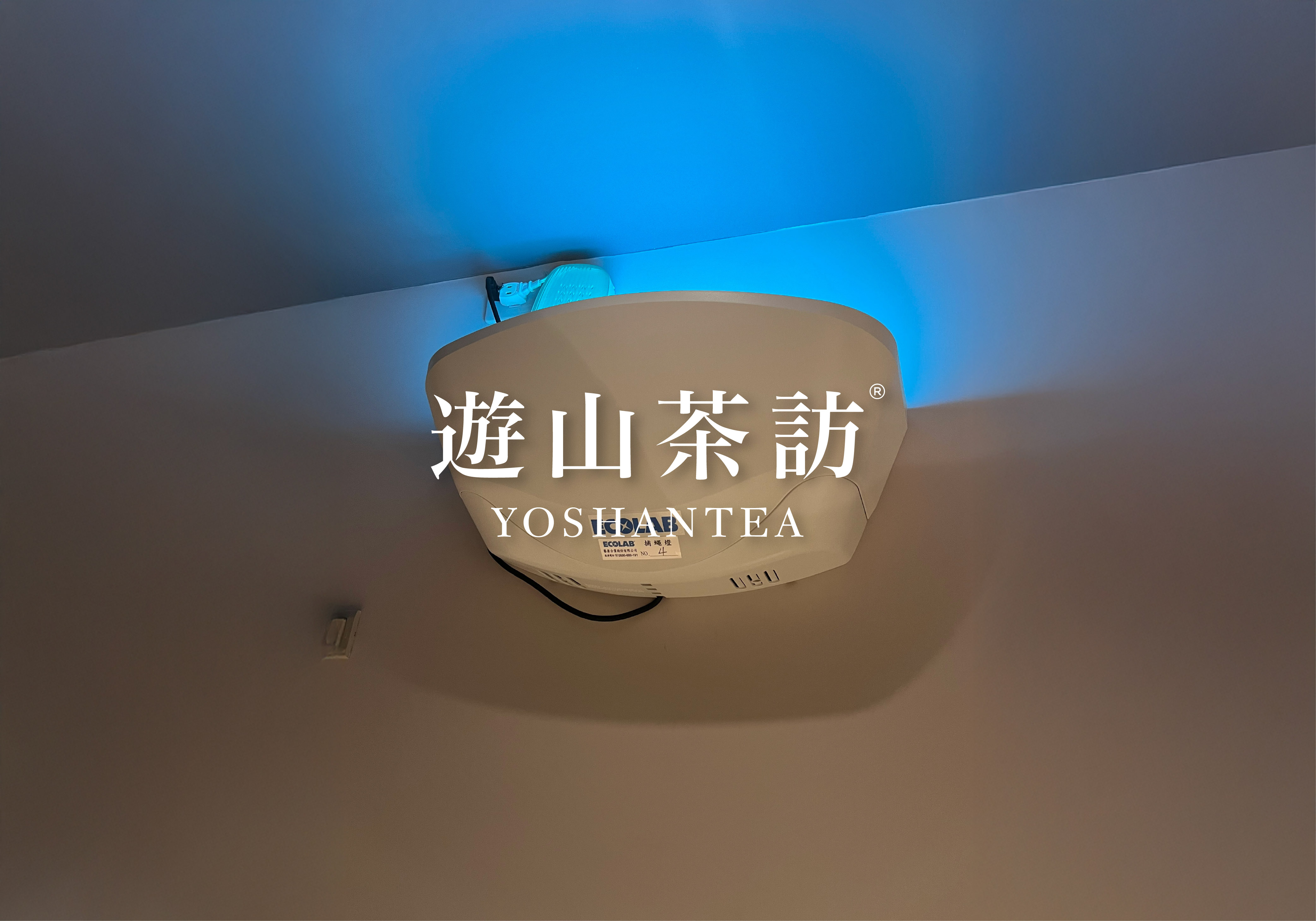
The first is attractant-type insect traps. Flying insects are most sensitive to ultraviolet light (UVA),
and effective insect trap lamps should emit wavelengths between 365 nm and 370 nm.
In terms of lamp types, traditional models use FL T5 or T8 fluorescent tubes,
while the current mainstream option is UV LED, which is more energy-efficient with a lifespan exceeding 10,000 hours.
Wattage ranges from 4W to 15W for home or small-space use, and 30W to 60W for commercial or large outdoor areas.
It is recommended to regularly record the number and species of insects caught by each trap unit,
using this data as the basis for trend analysis to identify areas that require more intensive control.
The second approach is repellent lighting.
These fixtures use long-wavelength light above 500 nm, producing a warm yellow-orange tone.
Because flying insects have low visual sensitivity to this wavelength,
they are less attracted to these light sources and tend not to approach them.
This type of lighting is suitable for areas where insect attraction is undesirable,
such as near entry points or packaging work zones.
Prevention over treatment: trap placement matters
Placing insect traps in the wrong location not only fails to prevent insects.
It actively draws them further inside.
The correct approach is to install a first line of electric insect traps on the outside of the most likely entry points,
and a second trap unit above the interior doorway as a supplemental barrier.
Never place insect traps at the far interior wall directly across from the main entrance.
Doing so essentially guides insects straight toward the production floor.
If space allows,
consider designing a dark S-shaped buffer corridor for personnel movement and a separate buffer zone for goods entering and exiting.
Using light and spatial design in this way naturally impedes insects before they can reach the production area.
Additional preventive measures
Beyond lighting management, several practical physical barriers are worth implementing.
Insect-repellent door curtains or air curtains can be installed at entryways to block flying insects using airflow.
These are particularly effective at high-traffic shipping and receiving doors.
The surrounding environment of the factory should also be inspected regularly.
Vegetation, stacked hollow bricks, drainage channels,
and similar features are common pest breeding grounds and should be incorporated into routine cleaning and management.
When spider webs are found, clearing them is only the first step.
A spider web is also a signal that flying insects are present in the area,
and the underlying source should be identified and addressed.
Pest control requires licensed professionals
All pest control operations must be carried out by professionals holding government-issued licenses.
This ensures that procedures are correctly executed and that all chemicals used are registered
and approved for use in food production environments, preventing any non-compliant residue.
Before engaging a contractor, prepare a floor plan of the factory.
Have the professional conduct an on-site assessment and develop a control strategy tailored to the actual conditions of the facility,rather than applying a generic standard plan.
Summary
Pest control is not a one-time task, and spending more does not automatically mean better results.
The right approach is to conduct regular monitoring and documentation,
analyze trends in pest species, quantities, and distribution areas, identify root causes,
and adjust strategies in a rolling manner.
Concentrate resources where they are truly needed.
When prevention is done well, the need for treatment naturally decreases.
That is the core principle of effective pest management in a factory.
Hope this has been helpful.
See you next time.
#yoshantea #taiwantea #dongdingtea #oolongtea #teafactory #FSSC22000 #safetea #teaknowledge #pestcontrol #foodsafety #teaprocessing #factoryhygiene #foodgradestandards