Hello everyone,
I’m Andy, a tea enthusiast.
Tea testing is an endless journey.
From basic pesticide residue testing, polar pesticide testing (herbicides),
heavy metal testing, microbiological testing, moisture content testing,
bulk density testing, and more-each test corresponds to different risk sources and management logic.
There are numerous testing items, and it’s impossible to anticipate and perfect all risks at once.
What truly causes pressure is often not the known testing items, but those “unexpected” tests.
Today, I want to share with you a risk source that has been increasingly emphasized in the European market in recent years but remains relatively unfamiliar in Taiwan-plant secondary metabolites: Pyrrolizidine Alkaloids (PAs).
What is PAs?
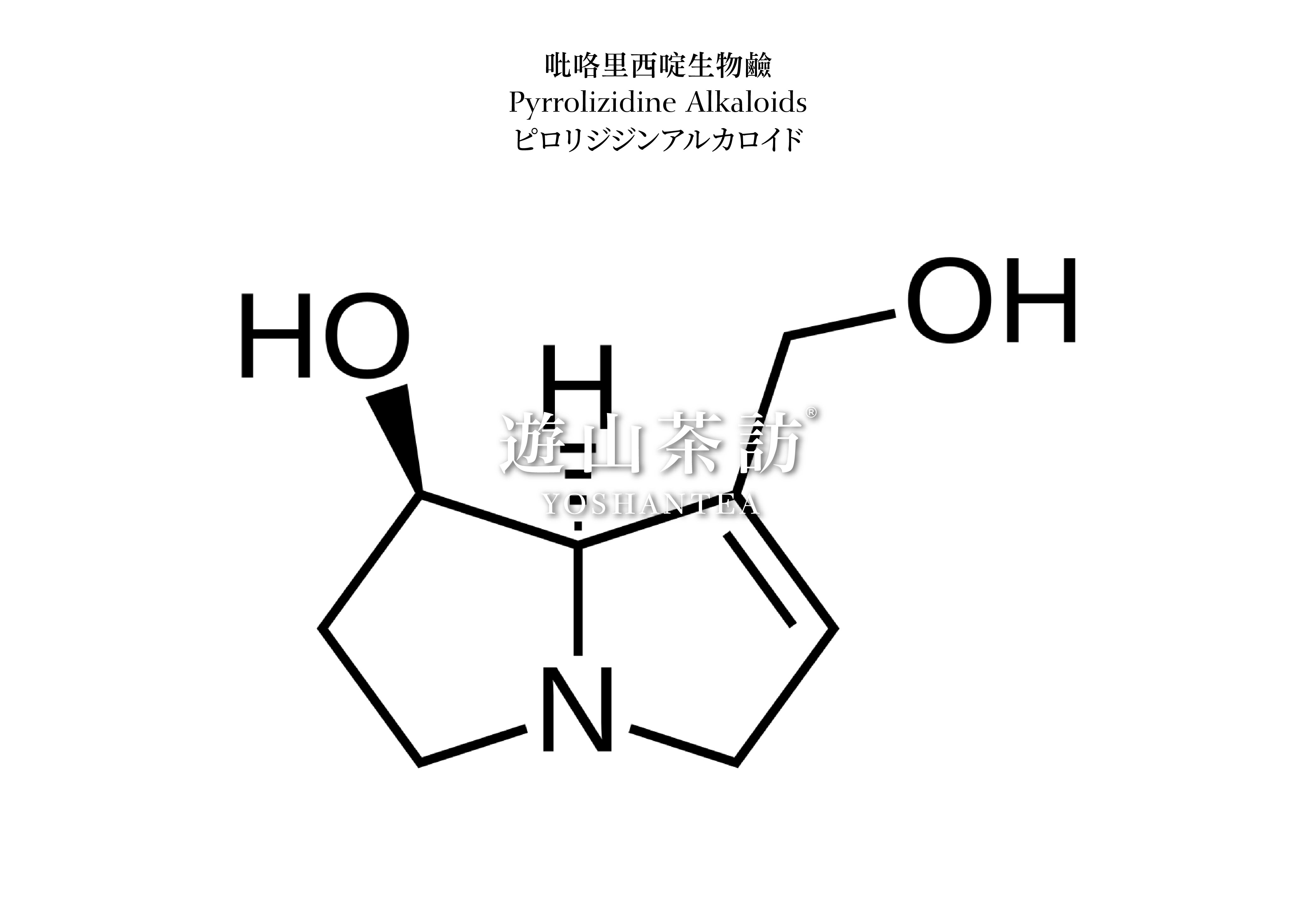
Pyrrolizidine alkaloids (PAs) are a large class of secondary metabolites naturally present in certain plants.
These substances are not used for growth or nutrition, but rather are chemical defense mechanisms formed by plants during evolution to resist insects and herbivores.
Currently, there are over several hundred known PAs structures,some of which may pose health risks after being metabolized by the liver in the human body, making them an increasing focus of food safety concerns.
Which Weeds Commonly Contain PAs?
PAs does not exist in all plants but is concentrated in specific plant families and genera.
Common sources include Asteraceae (such as the genus Senecio), Boraginaceae (such as the genus Heliotropium), and certain specific species in Fabaceae.
High-risk weeds commonly found in Taiwanese tea gardens include:
- Crassocephalum (Crassocephalum crepidioides): Asteraceae, common in tea gardens
- Chinese Senecio (Senecio scandens): Asteraceae, genus Senecio
- Heliotrope (Heliotropium strigosum): Boraginaceae
- Houndstongue (Cynoglossum lanceolatum): Boraginaceae
These plants are not uncommon in Taiwan and often grow on tea garden slopes, field ridges, wastelands, or grass-managed areas, making them the main sources of PAs risk in tea.
Why Do Tea Leaves Contain PAs?
This is a concept that must first be clarified.
Tea plants themselves do not synthesize pyrrolizidine alkaloids (PAs).
From the perspective of plant physiology and metabolic pathways, tea plants (Camellia sinensis) do not possess the key enzyme systems required for PAs synthesis and therefore cannot produce PAs on their own.
PAs detected in tea leaves almost always comes from external contamination, with common
causes including:
- Weeds being picked together during harvesting
- Incomplete removal of weeds during tea processing
- Insufficient weed management around tea gardens
- Higher proportions of high-risk plants in grass-grown or natural farming environments
It must be particularly noted that the PAs risk of mechanically harvested tea is generally higher than that of hand-picked tea.
Since mechanical harvesting cannot identify plant species in real-time, if PAs-containing weeds exist in tea gardens or on slopes, they are easily mixed in during harvesting, thereby increasing overall risk.
How to Prevent Tea Leaves from Containing PAs?
The key to PAs management is not back-end testing but front-end management execution.
Practically feasible approaches include:
- Regularly inspecting tea gardens and slopes, identifying and removing high-risk weeds
(especially Asteraceae plants like Crassocephalum and Senecio)
- Strengthening weed identification and training for tea pickers, providing field guides or on-site instruction
- Intensifying weed removal before harvesting in mechanically harvested tea gardens
- Ensuring removal of non-tea plants during tea processing
- Incorporating PAs into HACCP or PRP hazard assessment items
- Establishing weed management records, documenting removal frequency and species
These seemingly basic management actions are often more effective than any remedial testing.
What Toxicity Does PAs Have?
Certain PAs structures, when metabolized by the liver in the human body, form highly reactive intermediate products (pyrrolic cations), which may cause liver cell damage and even lead to health problems such as hepatic veno-occlusive disease.
It must be emphasized that PAs risk does not come from one-time large intake but from long-term, low-dose cumulative exposure.
Therefore, international approaches mostly adopt risk assessment models rather than using zero tolerance as the sole judgment standard.
What is the Synthesis Pathway of PAs?
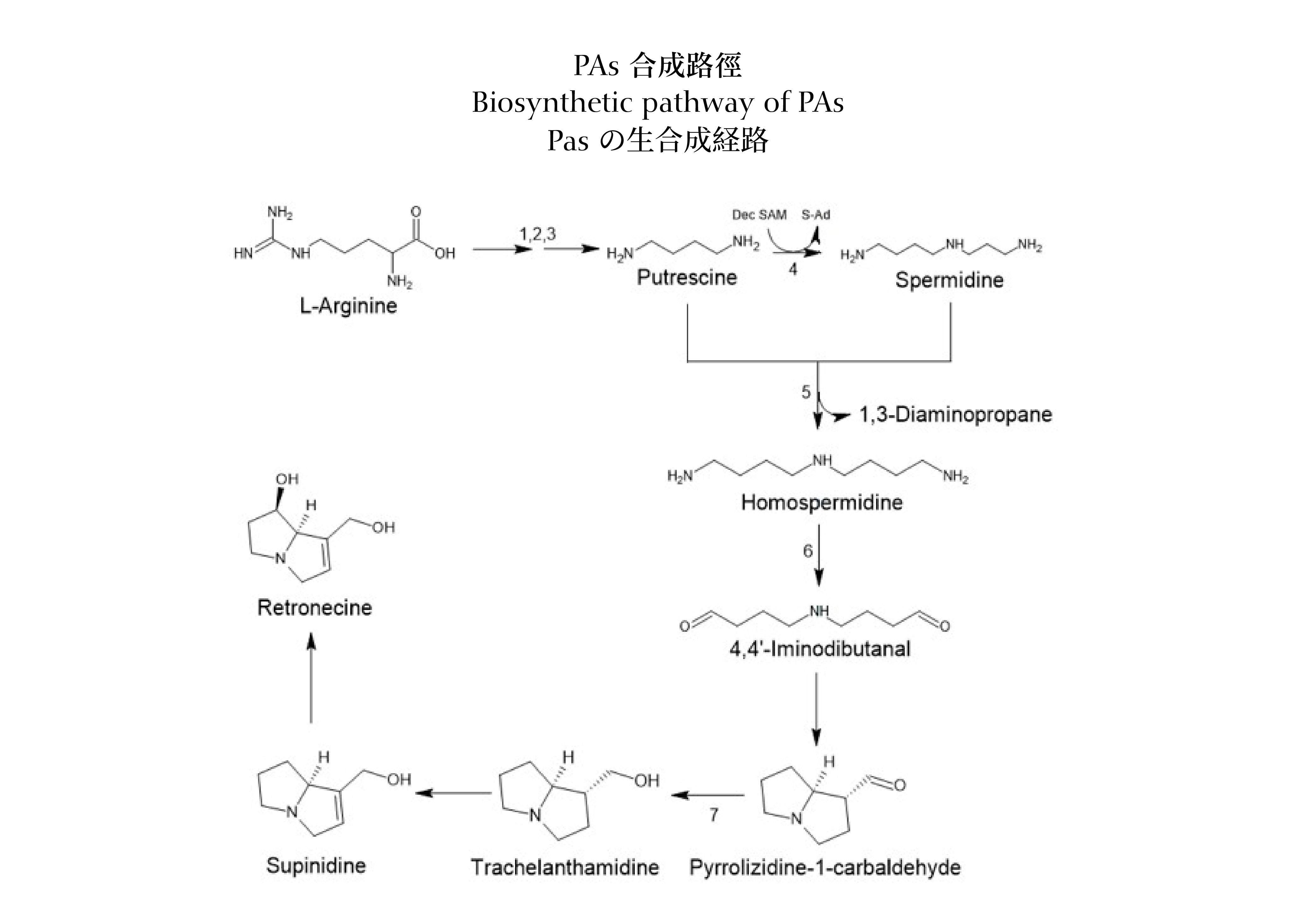
PAs biosynthesis begins with primary metabolic amino acids in plants (such as ornithine and arginine), which are converted through the polyamine pathway and then, through the key enzyme homospermidine synthase (HSS), form the core skeleton of pyrrolizidine (necine base).
Whether a plant possesses HSS is the key to whether it can synthesize PAs.
Tea plants do not possess this synthesis pathway, thus confirming once again that PAs detected in tea leaves does not come from the tea plant itself but from the contamination of secondary metabolites from other plants.
What Does a PAs Testing Report Contain?
For most people, the most difficult part of a PAs testing report is not the numbers but knowing which line to look at.
The report will first list the testing subjects, usually including Pyrrolizidine alkaloids (PAs) and Tropane alkaloids (TA), both of which are natural plant toxic alkaloids that have received high attention from the EU in recent years.
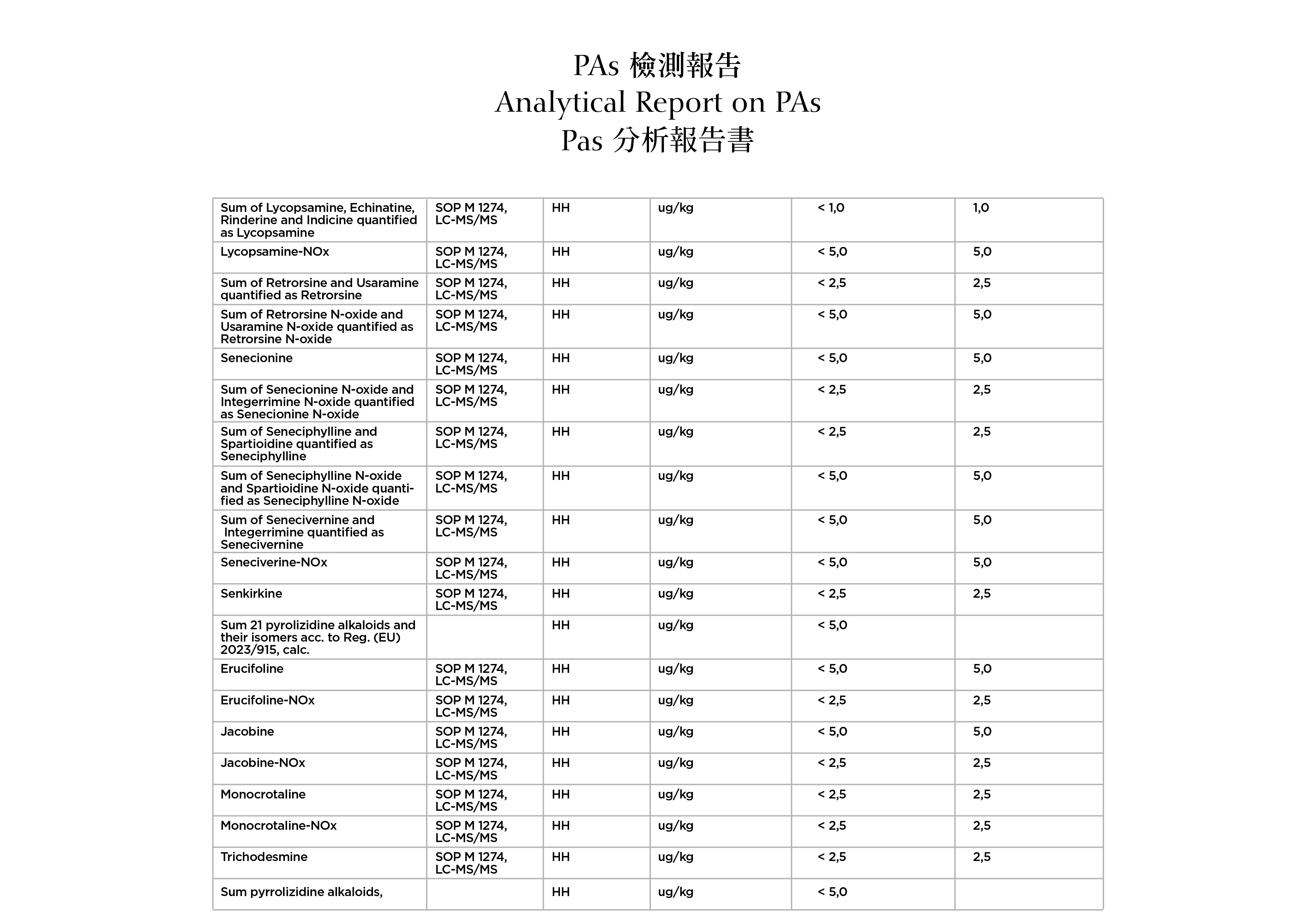
Next is the testing method, commonly LC-MS/MS (Liquid Chromatography-Tandem Mass Spectrometry), with corresponding method numbers indicated (such as SOP M 1274). Some reports will indicate the actual analysis unit, such as execution by SGS Institut Fresenius in Germany, indicating that the method and laboratory system are acceptable to the EU.
In the results page, you will see a long list of individual PAs compound names, such as:
- Senecionine
- Retrorsine
- Lycopsamine
- Echimidine
- Monocrotaline
Most results will show as < 1.0, < 2.5, or < 5.0 µg/kg, indicating below the limit of quantification (LOQ, Limit of Quantification).
“Below LOQ” means the content is extremely low, far below concentrations that could pose risk, and is considered acceptable in scientific and regulatory terms.
Interpretation of Actual Report Case
Taking the oolong tea testing report from Yoshantea as an example:
Tropane alkaloids (TA) testing results:
- All 5 TA compounds (Anisodamine, Atropine, Atropine-N-oxide, Scopolamine, Scopolamine-N-oxide) are all < 1.0 µg/kg
- Sum atropine and scopolamine < 1.0 µg/kg
Pyrrolizidine alkaloids (PAs) testing results:
- All 21 individual PAs compounds are below their respective limits of quantification (1.0-5.0 µg/kg)
- The most critical line:
Sum 21 pyrrolizidine alkaloids and their isomers, calculated according to Regulation (EU) 2023/915
Result: < 5.0 µg/kg
How to Interpret This Result?
This result of < 5.0 µg/kg represents:
1. Far below EU limit standards: The EU PAs limit for dried tea leaves is 150 µg/kg; this batch of tea has a detection value of only 3.3% or less of the limit
2. Extremely low risk level: Close to environmental background values, unlikely to raise market concerns
3. Reflects good field management: Demonstrates effective tea garden weed management, proper harvest process control, and effective tea processing screening
In the entire report, the EU is most concerned with this total sum line. If this result shows < 5.0 µg/kg, it practically represents an extremely low PAs exposure risk level and can be safely exported to the EU market.
What Do International Regulations on PAs Stipulate?
The EU has incorporated PAs into food safety management and considers it a natural compound with potential genotoxic risk.
Related regulations cover tea, herbal teas, spices, and infant foods, with the main regulation being Regulation (EU) 2023/915.
EU Tea PAs Limit Standards:
- Dried tea: 150 µg/kg
- Herbal infusions: 200 µg/kg
- Brewed tea infusion: Calculated based on brewing coefficient
The current management approach is not zero tolerance but scientific assessment through exposure levels and risk models.
For tea exported to the European market, PAs has become an important risk item that must be understood and managed in addition to pesticide residues.
Taiwan has not yet established regulatory limits for PAs, but considering export needs and international trends, it is recommended that industry operators proactively establish management mechanisms.
In summary, the existence of pyrrolizidine alkaloids (PAs) reminds us that food safety is not just about whether testing PAses but about long-term understanding of raw material sources, ecological environments, and management details.
Tea leaves themselves do not produce PAs, but the environment in which tea grows may cause it to bear risks that do not belong to it.
That’s all I’m sharing with you today.
I hope this is helpful to everyone.
See you next time.
#Yoshantea #TaiwanTea #DongDingTea #OolongTea #TourismFactory #FSSC22000 #SafeTea #PeaceOfMindTea #PyrrolizidineAlkaloids #PAs #FoodSafety #TeaSafety #TeaQuality #TeaTesting #EURegulations #TeaIndustry #WeedManagement #SustainableTea