Hello everyone,
I'm Andy, a tea enthusiast.
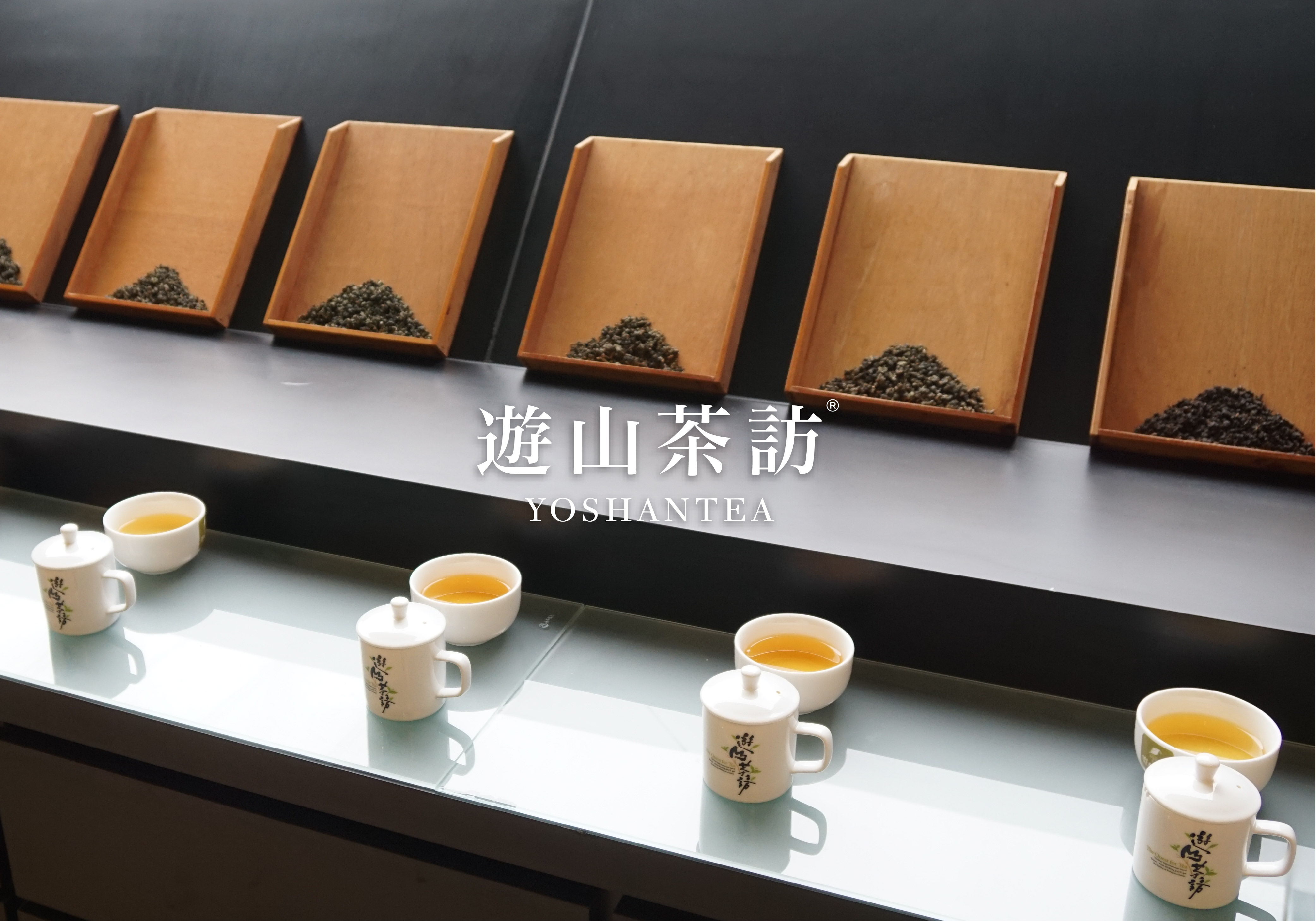
Have you ever wondered what equipment professional tea tasters actually use?
Why is that equipment designed the way it is?
There is actually an international standard behind it all: ISO 3103.
https://www.iso.org/standard/73224.html#lifecycle
This standard has existed since 1980, with a second edition published in 2019.
It specifically defines the method for preparing tea liquor for use in sensory tests.
This is the unified brewing standard for tea evaluation worldwide.
Many people assume professional tea tasting simply means adding tea to hot water,
but in the world of professional evaluation,
the volume of the pot and bowl, and even the weight of each piece, are all precisely specified.
Today, let's look at the logic behind these tools.
Why Do We Need Standardized Equipment?
The biggest challenge in tea evaluation is the sheer number of variables.
The same tea brewed in pots of different sizes or with different amounts of water will produce very different results.
The core idea behind ISO 3103 is simple: to compare two teas fairly, they must be brewed under exactly the same conditions, and the equipment is the first thing to control.
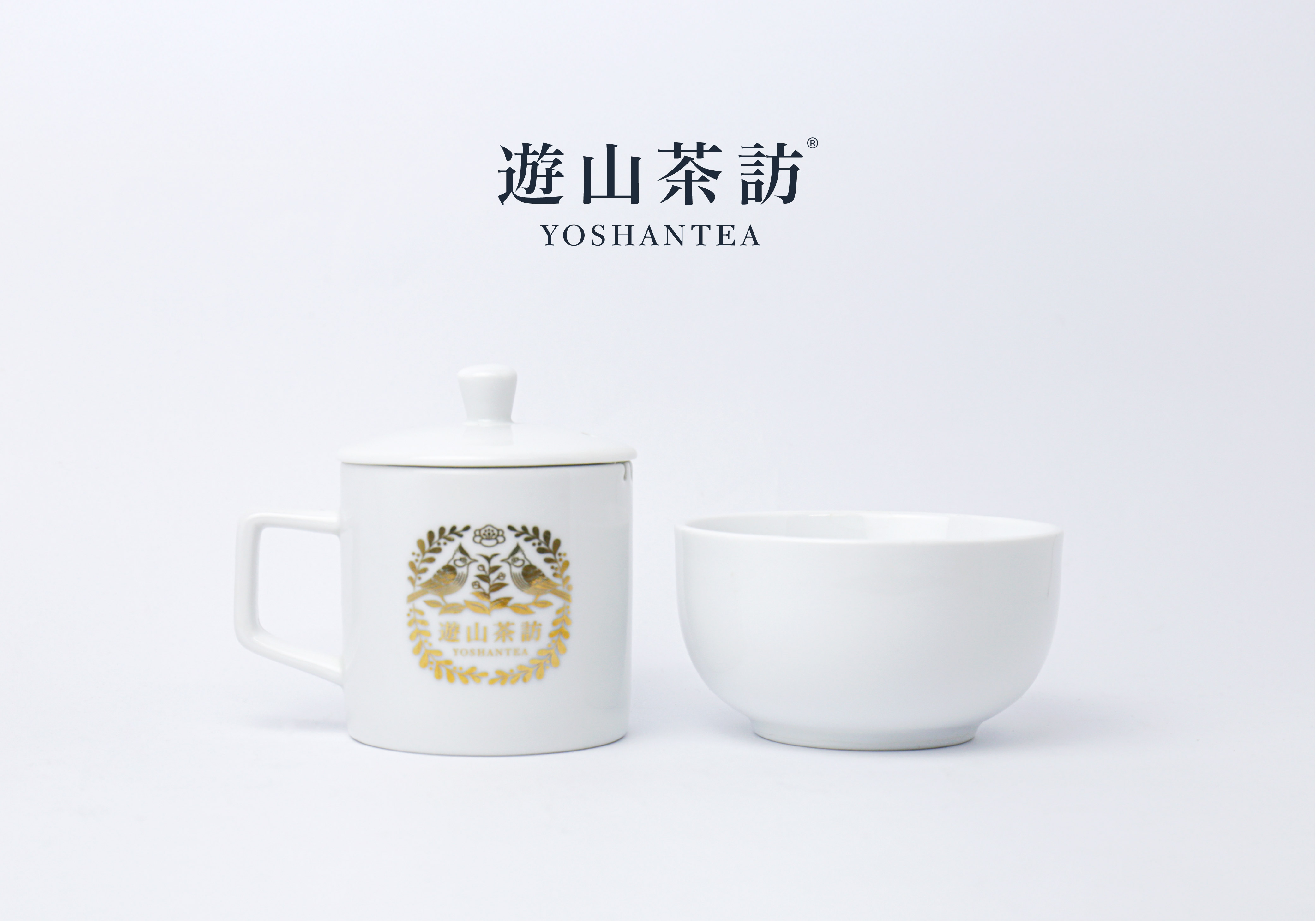
ISO 3103 requires both teapots and bowls to be made of white porcelain or white glazed earthenware.
The white background allows evaluators to see the truest color of the tea liquor.
The Two Equipment Sets Specified by ISO 3103
ISO 3103 offers two size options, a large set and a small set,
suited to different types of tea and different environments. However, the same set must be used consistently throughout a single evaluation session.
Large Set
- Teapot: 310 ml capacity (tolerance ±8 ml), weight 200 g (±10 g)
- Bowl: 380 ml capacity, weight 200 g (±20 g)
Small Set
- Teapot: 150 ml capacity (tolerance ±4 ml), weight 118 g (±10 g)
- Bowl: 200 ml capacity, weight 105 g (±20 g)
The tea dosage is fixed at 2 g of tea per 100 ml of water,
weighed to an accuracy of ±2%.
Water is added to within 4 to 6 mm of the rim.
The Function of the Serrated Spout
Looking closely at an ISO 3103 teapot, you will notice the spout edge is partly serrated (partly serrated edge).
This is not decorative. It is designed to keep the leaves inside the pot during pouring, while the liquor flows through the gaps between the serrations.
After pouring, the lid is inverted,
the infused leaves are transferred onto the lid, and it is placed on top of the empty pot for the evaluators to examine the leaf base.
Why White Equipment Matters
Both the pot and the bowl are explicitly specified as white porcelain by ISO 3103.
The porcelain material does not affect the flavor of the tea liquor.
Further reading:
https://www.yoshantea.com/pc/news.php?id=2005305ed1a4aa787c4&lang=zh-tw#gsc.tab=0
Against a white background, evaluators can accurately judge the depth and transparency of the tea color,
as well as the uniformity of the infused leaves once they have opened.
Any colored vessel would distort visual judgment.
This design logic is entirely consistent with the white tasting bowls used in Japanese tea evaluation.
The Importance of Water for Evaluation
ISO 3103 notes that water quality affects both the flavor and color of the tea liquor.
For this reason, the best water to use for evaluation is the same water from the region where the tea will actually be consumed.
When comparing teas across regions and a matching water source cannot be found, distilled or deionized water may be substituted.
However, evaluators should be aware that results will differ from those brewed with normal drinking water, because mineral salts themselves influence how a tea performs.
For example, a roasted tea brewed with distilled water may taste pleasant,
while the same tea brewed with spring water can develop a much stronger charcoal character.
Additionally, the boiling point of water at sea level is 100°C.
If the evaluation takes place at high altitude and the boiling point is noticeably lower, this should be noted in the evaluation report.
Further reading:
https://www.yoshantea.com/pc/news.php?id=2501036777a636ce300&lang=zh-tw#gsc.tab=0
The Sri Lankan Approach
Based on the official documentation from the Sri Lanka Tea Board:
The Sri Lanka Tea Board records that the professional evaluation method for Ceylon tea uses 2 g of tea with 150 ml of boiling water per sample,
steeped for 4 to 5 minutes before being poured into a white porcelain tasting cup for evaluation.
This 150 ml water volume corresponds to the sizing logic of the ISO 3103 small pot,
but the vessel used is a handled tasting cup,
rather than the wider-rimmed evaluation bowl specified by ISO.
In terms of procedure, evaluators stand while working,
first examining the appearance, size, and color of the dry leaf, then observing how the leaf base opens after steeping,
followed by smelling the aroma, and finally slurping the liquor loudly with a spoon so it contacts all parts of the tongue.
The Sri Lanka Tea Board operates a dedicated Tea Tasting Division,
responsible for quality control of each batch of Ceylon tea before auction and before export.
SRI LANKA TEA BOARD:
https://srilankateaboard.lk/ceylon-tea/ceylon-tea-and-the-environment/the-black-art-tea-tasting/
The Japanese Approach
Based on standard industry evaluation practice in Japan:
Japanese green tea evaluation (shinsa) also uses white bowls called shinsa-wan (haiken chawan), with the white color enabling more precise color assessment.
The standard conditions are 200 cc of hot water with 3 to 4 g of tea, a water volume falling between the ISO 3103 small and large sets.
The Japanese evaluation covers five categories:
- Katachi (leaf shape and appearance)
- Shikisawa (color and luster)
- Suishoku (liquor color)
- Koki (aroma, assessed immediately after steeping since it dissipates quickly as the liquid cools)
- Jiaji (flavor, assessed by slurping with a spoon)
For some tea types, such as oolong and black tea, a sixth category, hazo (leaf base appearance), is added.
Worth noting is that Japan also holds the National Tea Evaluation Skills Competition,
where evaluators identify the origin, cultivar, and harvest season of a tea from its appearance and liquor alone.
The highest rank is ninth dan, held by only around 20 people nationwide, making it an exceptionally rigorous certification system.
Shizuoka Tea Market:
https://chaichiba.co.jp/general/hyouka/
Tokyo Tea Cooperative Association:
https://www.tokyo-cha.or.jp/article/how-to-review-in-the-tea-show.html
ISO 3103 codifies this approach into an international standard, giving tea evaluation worldwide a shared framework.
I hope this article has been helpful.
See you next time.
#yoshantea #taiwantea #dongdingtea #oolongtea #teafactory #FSSC22000 #safetea #ISO3103 #teasensoryevaluation #teaevaluation #ceylontea #japanesetea #teatasting