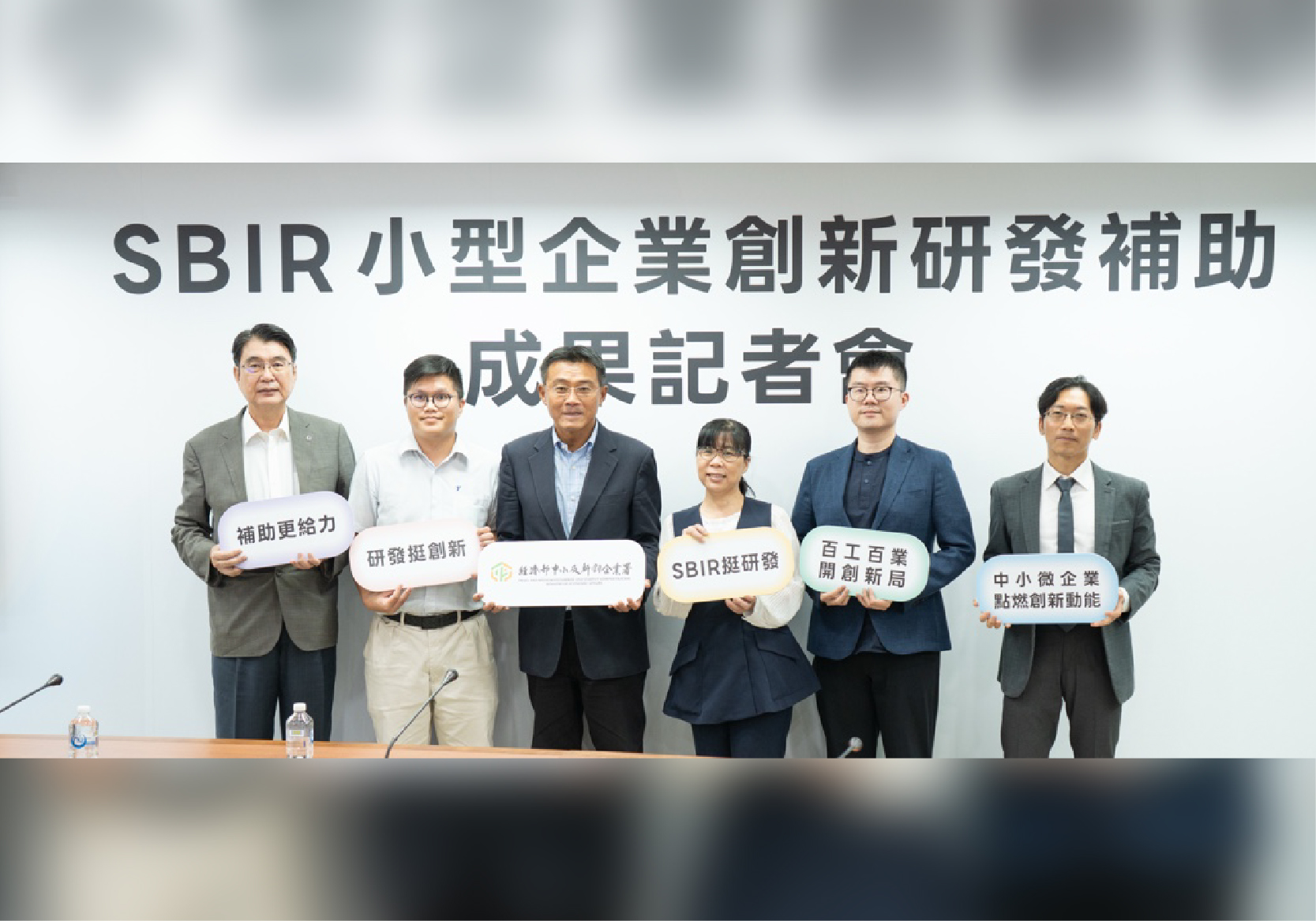
The Small and Medium Enterprise and Startup Administration (SMESA) of the Ministry of Economic Affairs held the SBIR Small Business Innovation Research Program Achievement Press Conference today (June 9), demonstrating the tangible results of the government's support for innovation and research and development among small and medium-sized enterprises (SMEs).
To accelerate industrial transformation in 2026, the government has worked with local authorities to guide regional SMEs in aligning with national policies. Funding ceilings have been increased, resulting in approved funding amounts doubling compared with the same period in 2025, a 44% increase in the number of approved projects, and a 33% increase in AI technology adoption. In addition, 20 projects focusing on AI smart applications, unmanned vehicle technologies, and net-zero solutions have been approved. These initiatives are expected to generate NT$210 million in domestic and international revenue while accelerating the intelligent transformation of SMEs across all industries.
SMESA stated that the SBIR Program has long been committed to creating the most supportive environment for R&D funding. In recent years, it has continuously optimized its mechanisms by simplifying application procedures, implementing paperless reviews, significantly reducing review time, and replacing written proposals with presentations during the preliminary research stage. This year, funding limits have been further increased to better align with industrial transformation needs, enabling SMEs to fully benefit from value-added opportunities created by AI and other innovative technologies while enhancing their competitiveness.
Based on different business development needs, the SBIR Program offers three major categories of R&D grants:
• Local Program – supports the development of regional specialty industries.
• Central Program – promotes technological innovation and service upgrades.
• Cross-Domain Program – encourages collaboration among SMEs and startups to increase revenue through innovative technologies or business models.
The SBIR Program supports SMEs throughout the entire innovation journey—from concept generation and product development to commercialization—serving as an important foundation for corporate innovation. Under the Local and Central Programs, the Phase 1 Preliminary Research stage provides grants ranging from NT$1 million to NT$1.5 million, helping businesses overcome early-stage funding shortages, lowering barriers to innovation, encouraging active R&D investment, opening new markets, creating new business opportunities, and injecting momentum into business growth and industrial upgrading.
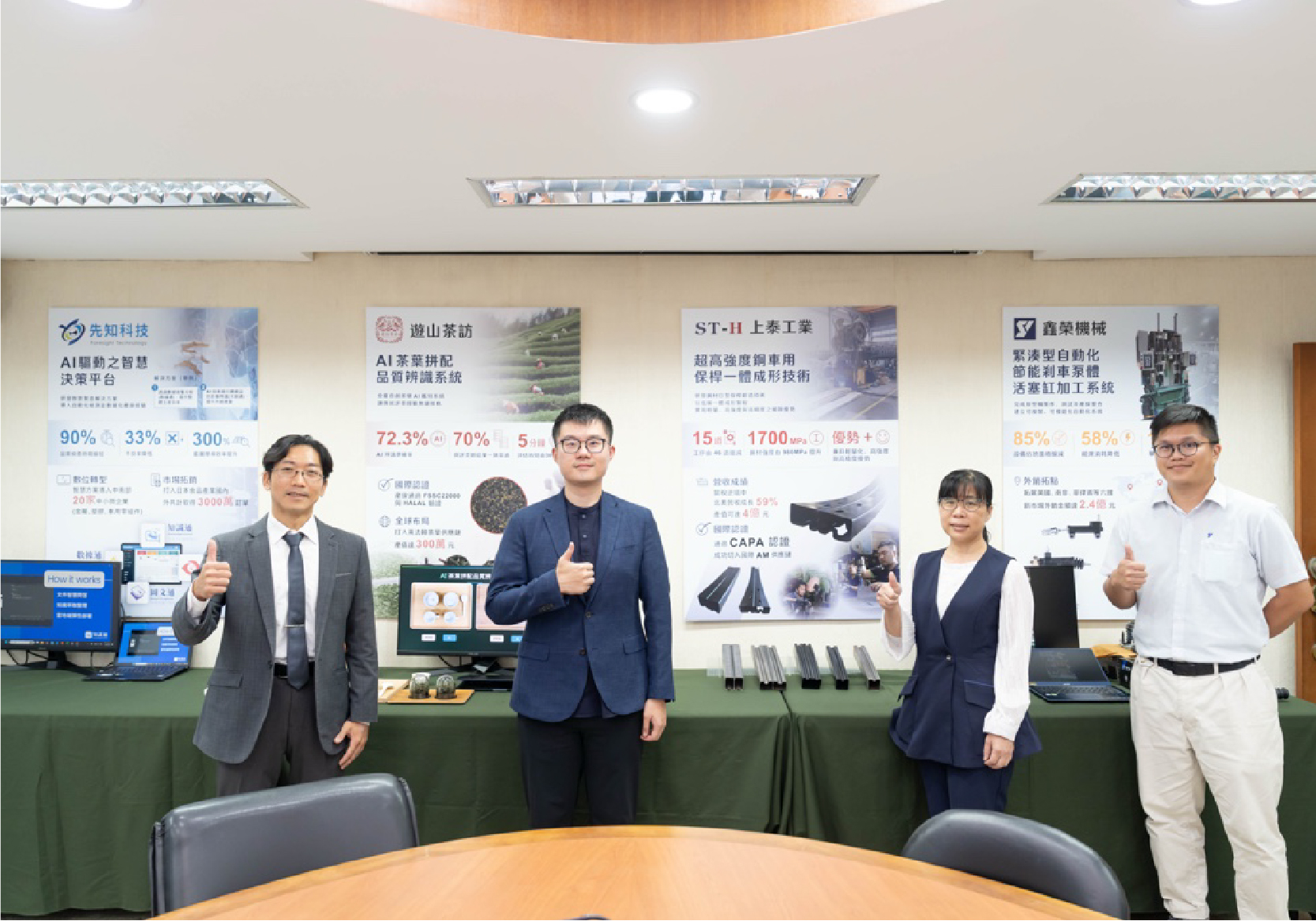
SMESA also invited four participating companies—Shin Rong Machinery, Shang Tai Industrial, Yoshan Tea, and Foreknowledge Technology—to share their successful transformation experiences through SBIR support.
After the third-generation succession, Shin Rong Machinery digitized its existing manufacturing processes, increasing production capacity by 151% while expanding into markets including the United Kingdom, South Africa, and the Philippines. Shang Tai Industrial developed low-carbon automotive metal components to meet customers' sustainability demands, achieving a 50% increase in North American revenue and generating output valued at NT$400 million.
Yoshan Tea developed an AI-powered tea identification system that addresses labor shortages and the loss of traditional expertise in the tea industry, successfully expanding into the United Kingdom, France, and South Korea. Foreknowledge Technology applies AI technology to optimize production processes and quality management in both agricultural and manufacturing sectors, successfully deploying smart solutions to 20 SMEs in Taiwan, entering Japan's food industry, and securing NT$30 million in domestic and international orders, demonstrating the practical impact of AI-driven industrial upgrading.
SMESA emphasized that, in order to strengthen Taiwan's industrial competitiveness, the Local Program will continue refining its collaboration mechanisms to encourage more regional SMEs to begin their transformation journey. The Central Program will continuously review and improve its application and evaluation process to better meet industry expectations for early-stage innovation funding. Meanwhile, the Cross-Domain Program will promote diversified collaboration themes, deepen technological cooperation among SMEs, foster innovative application services, expand industrial influence, and facilitate international market development.
Spokesperson: Lee Chia-Chin, Deputy Director General, Small and Medium Enterprise and Startup Administration, Ministry of Economic Affairs
Tel: +886-2-2366-2203
Email: jjlee@sme.gov.tw
Business Contact: Wu Kun-Yen, Division Chief, Small and Medium Enterprise and Startup Administration, Ministry of Economic Affairs
Tel: +886-2-2366-2337
Email: kywu@sme.gov.tw
https://www.moea.gov.tw/MNS/populace/news/News.aspx?kind=1&menu_id=40&news_id=122968